Tuesday, February 28, 2006


Salman Rushdie, Ayaan Hirsi Ali et al Slam Islamic Totalitarianism

MANIFESTO:

Together facing the new totalitarianism

After having overcome fascism, Nazism, and Stalinism, the world now faces a new totalitarian global threat: Islamism.

We, writers, journalists, intellectuals, call for resistance to religious totalitarianism and for the promotion of freedom, equal opportunity and secular values for all.

The recent events, which occurred after the publication of drawings of Muhammed in European newspapers, have revealed the necessity of the struggle for these universal values. This struggle will not be won by arms, but in the ideological field. It is not a clash of civilisations nor an antagonism of West and East that we are witnessing, but a global struggle that confronts democrats and theocrats.

(The rest is here)

I urged the Editor of the Independent Coast Observer to publish the Mohammad cartoons. Then I signed a letter proposed by a frequent political adversary, Steve Finz, again urging publication of the cartoons Islamists find so offensive. Today I found that Islamists find just about everything anyone does offensive. In India Muslims are protesting against a variety of pictures, including of Mecca and animals, even on decks of cards. The first protest they made that involved force or coercion was one too many.

They can protest all they want. Damn, that's the American way! But threats mean no respect, and violence means that they are disrepecting their own religion far more than an Infidel like I could. If there is an Allah, He has got to be wondering how His work got so screwed up, especially since nothing is supposed to happen without His OK.

Porky Pig is PO'd

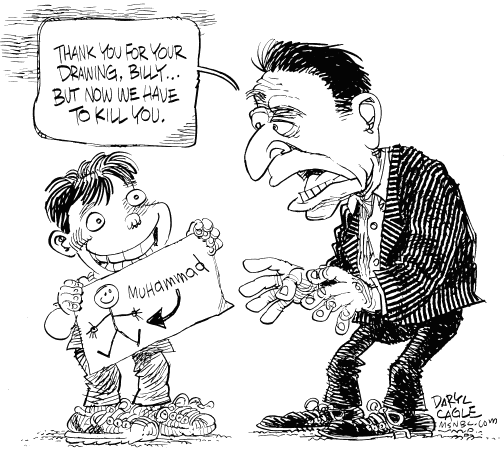
Of all I have have seen and read about the Mohammad cartoons, this cartoon sums it up perfectly. Muslims are trying to plant a culture in the West that is totally alien to the customs and beliefs of the host cultures. In the United Kingdom, literature that has been cherished and beloved of British children for generations has been removed from classroom shelves because drawings and pictures of pigs on the covers offend Muslims.

If you think about it for a moment, doesn't it seem odd for a major religion to make a simple pig into a satanic totem? To me, that suggests an incredibly simplistic and primitive religion, and as its adherents kill each other and "infidels" over the cartoons, it is impossible for me to give them the respect they say is their right. To me, their actions define who they are, and they are fools.

If you are a Muslim, and object to being called a fool, then make them stop the foolishness. I won't respect you if you keep your mouth shut, and I don't care if I offend you when you support terrorists. That is as offensive as Hell to me!

As P-P-P-Porky P-P-P-Pig might say, "You people are making me really pi-pi-pi...... you're making me mad!"

(The caption of the cartoon, courtesy Cox & Forkum, is "Toonophobia. An irrational fear of blasphemous line drawings.)


Monday, February 27, 2006

Warm Memories Of A Cold Wet Winter Night


In 1960, I was in my last semester at Point Arena High, and dating my late first wife Marilynn. A mighty storm peaked in February on the night of our Valentines Day Sweethearts Ball . I dressed up in my best -- white dinner jacket, black slacks - the white dinner jacket was Mom's idea. I think I was the only one in the area that had one. Everyone else just wore a dark suit. I drove our 1950 Chevy down coast to pick Marilynn up for the dance.

I was a Senior, Marilynn a Sophomore. Her family lived about half a mile up a steep dirt road off Highway 1, which years later was named Gypsy Flat Road by the new owners. I turned off Highway 1 and started up, but soon realized the old Chevy was not going to make it very far up the slippery, muddy road. I stopped at a neighbors house close to the bottom of the road, parked, put on a rain slicker and rubber boots, and walked up to Marilynn's house. She put on her rain slicker over her prom dress (blue, with spaghetti straps, just gorgeous) , donned her rubber boots, and we sloshed down to the car. We left the rain gear with the neighbor.

We drove to the Ball, had a wonderful time, drove back to the neighbors, and reversed the process. After I walked her home, got a cup of hot cider and a good night kiss, I slogged back down the hill, recovered my car, drove home, dreamed all night of spaghetti straps on bare shoulders, and the mysteries hidden by fluffy prom dresses. *sigh*

Why Planes Break Down In Christ Church


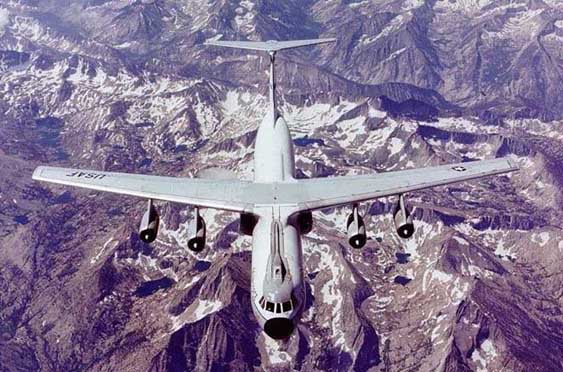
When I was the Comptroller (military money man) for a military cargo plane (airlift) group on Hickam Air Force Base, Hawaii, I managed the compiling and submitting of monthly reports of our airlift services in the Pacific to higher headquarters. A sergeant worked for me who did the actual work, I just had the pleasure of explaining his findings. We used a novel method of tracking aircraft performance against scheduled arrival times throughout the Pacific, which included weekly flights to Australia and New Zealand. If an airplane was delayed enroute because of a mechanical problem, we would add the delay time to the scheduled arrival times at bases along the way. For example, suppose a C-141 cargo plane was delayed 24 hours leaving its home base, Travis AFB, California, on the start of its mission which included Hickam AFB, Hawaii, then American Samoa, Christ Church in New Zealand, a round robin of bases and communication stations in Australia; RAAF Richmond near Sidney, then Woomera, then Alice Springs, back to Christ Church, American Somoa, Hickam, and home.

If the plane was delayed, we would just add 24 hours to the scheduled arrival times at each base, and if the plane made the new scheduled times, we would report the mission as 100% on time, even though against the original schedule the performance was 0% on time. If the plane had a problem enroute, we would similarly adjust the schedule for the mechanical delay time. The bottom line was that our statistics showed that we operated an almost 100% on-time system.

That impressed my bosses, but it didn’t impress the U S Army general stationed in Australia, who informed my boss that our planes rarely arrived according to schedule. His point was that if he was told to expect our plane at his base on Wednesday and it didn’t arrive until the next day, it was late. And our lateness caused him problems. He had people all packed and ready to leave, or work ready to be done by someone who was supposed to be arriving per the schedule. When that didn’t happen, work and lives were disrupted.

My boss noted that I told him each month that we were almost perfect in accordance with our reporting system. He said an Army general was chewing on his ass telling him just the opposite. I said I would check it out and report back.

I soon found the Army general was right, and the problem was caused by something the Air Force had little control over.

Our review showed that our aircraft had little or no mechanical problems flying the route. They rarely if ever had mechanical breakdowns except for one stop, Christ Church, New Zealand. In fact, on each mission the aircraft usually broke upon arrival at Christ Church on both the inbound and outbound legs, causing a delay of 24 hours each breakdown. What was it about Christ Church that was so rough on Air Force airplanes? The commercial flights going in and out didn’t seem to have any problem.

After considerable study and much pondering of data, we finally got to the bottom of the problem, which we found involved the bottoms and other delectable parts of New Zealand women. It appeared that they and their parts were crazy about Yanks, and vice versa. Therefore, the crew chief on each plane would save a mechanical discrepancy, actually quite minor, but which upon arrival at Christ Church was declared a danger to flight operations until repaired. All the single guys and Class B bachelors would indulge their and the young ladies fantasies, then bid a fond farewell with the promise of return in a couple of days, when another mechanical emergency would miraculously occur.

What was I to do with this unexpected revelatory information? Had I been an honorary Jew then, I would have asked myself, “What would Solomon have done?”

Instead, I asked the sergeant what he thought. He thought that our airplanes would keep breaking down in Christ Church every time they landed there. His statistics supported his judgment.

That’s when I earned my gold leaves – my Major officer insignia. “What if we only stop at Christ Church on the way out?” I said.

The change worked beautifully. With Christ Church as their goal, the aircraft arrived at each enroute base precisely on schedule with the precision of fine Swiss watches, until the inevitable breakdown at Christ Church on the return leg. At that point, no one minded the delay. Some lovely New Zealand ladies had their love lives cut in half, but the Yanks were just that much more eager and ready to entertain them, and make the best use of their reduced time together.

Mohammad Cartoon Protest A Portent Of Future


"(The Danish cartoons are) important in combination with other fast-developing events, including the victory of the openly terrorist Hamas in a Palestinian election; Iran’s public promise to “wipe Israel off the map”; collapsing public order in Pakistan, Nigeria, and elsewhere; the recent Muslim riots, and continuing low-level Intifada in France; and now the destruction of the Golden Mosque in Samarra, triggering vicious sectarian strife in Iraq. And quite literally, hundreds of lesser events of the same nature -- each revealing an Islamic world in combustion, and a West retreating into contrived apologies and other confused gestures of cowardice and panic."

Go here for the rest of "Oncoming" by David Warren

Sunday, February 26, 2006

Number, Please?

The dial telephone did not come to Point Arena until approximately 1954. Up till then, we had crank telephones. You started the call by turning the crank, then you lifted the ear piece out of the cradle and waited. Soon the operator, usually Pearl Warren (and before her, Dorothy Halliday), would come on the line: “Number, please?” Our number was 41W. Two rings. We were on a party line with the Methodist preacher. His number was 41J. One ring. Most of my friends had private lines, with numbers like 2, and 45; you could tell the ones with private lines because they didn’t have a letter after the number. 

When Ron and I came home from school, for one reason or another we would usually want to get in touch with Mom. If we weren’t in a hurry, or just wanted to go downtown anyway, we could tell Puddles to “find Mom.” But if we were in a hurry, or wanted to let her know we would be at a friend’s house, we used the phone. “Number, please?” When we were little, we used to just tell the operator the place we were calling – “Motel, please” – instead of the number. Now that we were big, we used the numbers. “36, please.” “Mike, your mother isn’t at the Motel,” Pearl might say. “I just saw her walking up the street. I think she was going to Disotelle’s. I’ll ring the bar for you.” 

The telephone switchboard where Pearl worked was in a building in the center of downtown Point Arena, next to Titus’ Sweet Shop, with a big picture window that overlooked Main Street. Between keeping track of everyone by their phone calls, and watching their comings and goings on Main Street, Pearl usually had a pretty good idea about where most of us were at any point in time. 

Today we have cell phones, and pagers, and all sorts of other sophisticated electronics. None of them work worth a darn in Point Arena. After more than sixty years have passed, and after all our progress in electronics, we still got better service in Point Arena when Pearl came on the line: “Number, please?”

Saturday, February 25, 2006

Puddles, The Pup

One fine Saturday, during the summer of 1950, Pop drove us from Point Arena to Booneville in our old red International Harvester pickup truck. As usual, when we got to Philo Pop was dying of thirst, so we stopped at Pardini’s Restaurant and Bar. Mom and Pop had a couple of cold Burgies (Burgermeister Beer, Pop’s favorite). Brother Ron and I had a soda pop each, then we started to explore the bar area. Our exploration soon took us to the Men’s restroom, and when we opened the door the cutest black puppy ran out wagging her whole body, licking us, and in her excitement, piddling on the floor.

The bartender saw the excited puppy jumping all around us and piddling on his floor, and told us that a guy came in with the dog earlier, and must have left it in the bathroom. That started a search of the restaurant and the parking lot, and one fellow said he had seen the man with the dog, and had seen the guy drive off. After a while there was a general agreement that the man had forgotten the dog, or had abandoned her. Of course, by that time Ron and I had fallen completely in love with the cute little thing, and had already named her Puddles. We were sure that Puddles had been abandoned, and that no one would come back to get her, and could we keep her, please! At first it looked like Pop’s answer would be “no,” but after a while watching us, and Puddles, and petting her a bit himself, the answer was a qualified “yes.” Yes, we could take her with us, but we would leave our address and phone number in case Puddles had been forgotten, and her owner came back to get her.

So we took Puddles home with us, and after a while the worry that her owner would come back for her slowly faded out of our minds. At the same time, every one of us developed such a love for Puddles that before long she was an inseparable family member. Puddles was a cocker spaniel, but she also had some other breed of dog in her. What breed, no one had any idea. Puddles was smaller than a cocker spaniel, had a relatively longer body and relatively shorter legs, with short black hair and a bobbed tail. Plus the sweetest face and the most adorable eyes that two young boys had ever seen.

Soon Puddles was a part of and increased our enjoyment of everything we did. When we all went for the evening to the Point Arena Hotel bar (children could accompany their parents to bars in those days), Puddles would soon charm everyone in the bar. When Mom and Pop would dance, Puddles would take Pop’s pants leg in her mouth and dance too. At the end of the dance, she would go along the bar accepting packages of beef jerky from the spectators.

Puddles quickly made everything around her a part of her life. We used our wood burning cook stove to heat the room when we lived in the old abandoned high school building. To get maximum heating, we would open the oven door by pulling it down. Puddles soon found she could hop up onto the door, and even crawl into the oven to get nice and warm. She would then go to sleep, and as the oven got warmer, while still asleep she would move out of the oven, onto the door, and eventually move so far away from the heat that she would fall off the oven door onto the floor.

There was nothing we did that Puddles didn’t find a way join in. When Pop moved our milk cow, Cinnamon, from one pasture to another in town, he would tie a short rope around Cinnamon’s neck and give the other end to Puddles. Then Pop, Puddles, and Cinnamon would strike out down Highway One to the new pasture. Pop would lead, and Puddles would follow leading Cinnamon. Passers-by would stop their cars and look and laugh at the proud little dog leading the docile cow, with Pop in the lead, cigarette in one hand, can of beer in the other.

Mom worked at many cleaning jobs in downtown Point Arena, including the Point Arena Theater, the Motel, and the rooms above Titus’ Sweet Shop. When we came home from school we could tell Puddles, “Find Mom.” Puddles would trot out the door, lead us down the hill into the center of town, and then sniff at doors starting at the Theater and working her way down the street towards the Motel. Sometimes Puddles would find Mom at the Theater, sometimes at Fred and Flora Price’s bar in the Hotel, or in the Motel, but she always found her.

Puddles had a mysterious talent, too. At around five in the afternoon, Puddles would let us know she wanted to be let out of the house to wait in the driveway for Pop to come home from work. We would let her out, and about five minutes later Pop would pull into the driveway. If Puddles wanted out earlier than normal, Pop would get home earlier than usual. And if Puddles didn’t want out at five, we knew Pop would be late. It was uncanny. Puddles never went out just before Pop pulled in, which would have indicated that she could hear our new old car, the 1946 Chevy, clunking down the road quite a ways away. No, she always went out five minutes before his arrival, when Pop was at least three or four miles away.

Puddles died after Christmas in early 1961, when I was in my Freshman year at Humboldt State College. I was very sad, knowing she was gone and that I wouldn’t be able to come home and say good-bye to her until Spring Break two months later. Now forty-five years have passed, and I still miss her. And I’m still thankful for the wonderful ten years we shared.

If dogs have a Heaven
There’s one thing I know
Little Puddles has
A wonderful home.

You Gotta Ring Them Bells

After we moved to Point Arena in 1949, we would occasionally drive to Booneville, and Pop would get thirsty about the time we got to Pardini’s Restaurant and Bar in Philo. Back in those days, children could accompany their parents in the bar area, and my brother Ron and I always enjoyed the time we spent in bars with our folks. We would get a soda pop, sometimes grenadine with 7-Up and a cherry. We both got really good at bumper pool, and shuffle board, and liars' dice. Speaking for myself, I also easily memorized the lyrics to every popular and Country and Western song of the late Forties and early Fifties, and the lyrics haunt my mind to this very day. It’s scary to have The Squaws along the Yukon, Down in the Caribbean, Slow Poke, This Old House, The Pawnshop on the Corner in Pittsburgh Pennsylvania, and The Blacksmith Blues running through your head at odd hours day and night.

One time, sitting near the bar at Pardini’s sipping my soda, I overheard the proprietor telling Pop about when he was a young man and had just gotten married. At that time, he and his family all lived in rooms above the bar and restaurant, and after the wedding and a lot of partying, drinking, and dancing, the newlyweds finally excused themselves and went upstairs to their bedroom. Their bedroom was directly over the bar, and a hole had been drilled above the bar and through the floor under the bed. A string had been threaded through the hole and one end tied to the bed. The other end was tied to a bell that dangled above the bar. Every time the bell started ringing briskly, the drinks were on the house. The father of the groom had been heard to lament that the lusty young couple nearly put him in the poor house that night.

Where Did You Get That Accent?

“I think you’re from the South. You have a southern accent.” I’ve heard this from many people the past fifty years. Not as much anymore. Years pass, and my southern accent has faded.

I didn’t come by my Southern accent the usual way. My parents weren’t from the South. Pop was born in Washington State on the flank of Mount St. Helens, and grew up in Bakersfield, California. Mom was born in Bradford, Pennsylvania, and grew up in Maricopa, California. I was born in Torrance, California, and grew up in Point Arena on the northern California coast. I was twenty years old before I got further from California than Reno, Nevada, and Tijuana, Mexico.

So where did I get my southern accent? For the answer we have to look at historical migration and employment patterns affecting California during the past century. During the Depression, many Southerners came to California looking for work and to escape the Dust Bowl years, as Steinbeck chronicled in The Grapes of Wrath. Many of them came from oil drilling parts of the South, particularly Oklahoma. When I was a five-year old in Bakersfield in 1947 I remember listening to a song:

Dear Okie,
If'fen you seen Arky
Tell him Tex got a job for him
Out in Californy

A lot of the Southerners got jobs in the oil fields, and that’s where Pop worked as a “roughneck” from about 1932 until 1949, except for the war years when he worked in Long Beach building Liberty ships, again alongside a lot of Southerners.

When we moved to Point Arena in Northern California in 1949, and Pop worked in the sawmills, one thing didn’t change. Most of his fellow workers were from the South. When the Air Force built the Point Arena radar station in 1950, most of the military that manned it were from the South.

So there is the explanation for my Southern accent. I didn’t go to the South. The South came to me.

After The Summer Of 1954

The combined 7th and 8th class, 1955-1956, Taught by teacher and principal James E. Russell. There are 54 of us in this picture, but at times we had over 60 students in our combined class. 
I start the second row, and younger brother Ron is the second on the left in the first row.

The summer of 1954 was ending, and it was time for me to begin my sixth year at Point Arena Elementary and become a Seventh Grader. Our Principal, Mr. James E. Russell, also taught the combined 7th and 8th grade class. Since starting school in the 2nd in Point Arena in 1949, I had always been in classes that combined two grades.

On our first day back in school, the starting bell rang and we trooped into the mystical classroom of the 7th and 8th Graders – mystical because the 7th and 8th Graders were the top dogs at Point Arena Elementary, and lorded it over the lower classes until graduated to Point Arena High School as lowly Freshmen. Little did we know that the mystique was about to crumble.

As we entered the classroom, we soon noticed that there was not enough room for everyone. In fact, about half of us were left standing when all the desks were taken. Mr. Russell entered the classroom, looked around, and said: “OK, get a desk and follow me.” So began our curious trek from the classroom at the front of the school to the all-purpose room at the rear.

As we dragged the desks down the hallway, we speculated how our new classroom would be arranged. Some of us thought the desks should be suspended from the ceiling, with catwalks between the desks, to keep the floor space open for other activities. Mr. Russell thought that was a good idea. He would have a release system with levers on his desk, and if a student was misbehaving, Mr. Russell would pull the lever for that student’s desk and send the offender crashing to the floor.

To our disappointment, we soon had our desks arranged in seven rows of six or seven desks in each row facing the wall at the north end of the all-purpose room. Mr. Russell centered his desk at the front, flanked by two portable blackboards. Behind us was an open area between our desks and the stage. Two ping pong tables soon became fixtures in the eastern portion of the open space, and an upright piano was placed to the right of the stage on the other side.


This is the all-purpose room today. Imagine the room bare, then imagine two portable blackboards below and flanking the basketball hoop. In front of that, center, was Mr. Russell's desk (in the basketball "key" then, today they would say in the "paint"), and lined up in columns facing that end of the room were six or seven rows of portable desks.

With about sixty students in our combined class, we began a two-year adventure that I now consider one of the most enjoyable and pivotal periods of my life.

Mr. Russell was more than equal to the task of teaching us under difficult circumstances. Personally, I think that this man of great energy and talents enjoyed the challenge, and that he thrived on the adversity. The first year in the all-purpose room he had almost fifty students; the next year there were over sixty of us. We were a diverse group before Diversity became a religion, and an excuse for the failure of poor teachers. Many students were from the South, the sons and daughters of the Grapes of Wrath migrants who now filled so many of the jobs in the saw mills. About ten percent of our students were Native Americans and most of them lived on the local reservations.

During a typical school day, my classmates and I might be quietly working on an English or math assignment at our desks, while Mr. Russell would be going over a completed assignment with the other class. At the same time, the 3rd and 4th Graders might be on the stage behind us doing a dress rehearsal of their Christmas play, or the music teacher, Lois Scaramella, might have our (all female) Glee Club rendering Danny Boy or Climb Every Mountain. To this very day, my mind’s ear can still hear their breathy, high sweet voices -- great singing? Maybe not, but the memories are priceless. As the years pass, I also reflect that maybe, at that time, I didn’t know how much I would be enjoying the music now, as it still swells and echoes in my mind – Oh Danny Boy, the pipes, the pipes are calling…and a tear is running down my cheek.

My reverie is broken by the bell announcing recess. Was ever time better spent than at recess? We rushed from the room with deafening shouts: “I’m up!” “Still only one away!” “It’s my turn to pitch!” “Mike, forget the girls, we need a right fielder!”

We learned so much at recess. Friendships started and grew. We learned to play hard, and to play by the rules. My buddy Sam taught me that you could be cunning, and still play by the rules. He was always coming up with some scheme to win all our marbles, without having to be a good marbles player himself. He usually succeeded. Sam left nothing to chance. He researched the dictionary for killer words to use in Hangman, words like “Iraq” (no u after the q), zygote, or xylophone.

At recess, the girls had better things to do than silly baseball, or silly basketball, or silly soccer. To this day, I still don’t know what they did at recess, but they did do something, and they enjoyed it, and I wish I knew what it was. Maybe it would have been fun -- probably not.

Being with the girls was fun. I really liked girls – so pretty, so sweet, their thought processes total mysteries. I saw little evidence that we really were of the same species. My hormones were raging. Weren’t theirs too? They seemed to want to aid and abet my raging hormones – up to a point, that is; a point that, try as I might, I never passed. Not even with the girls who were “easy.” If the truth were to be known, I think my tale of those sexually frustrating times is the typical one; I think we were all The Great Pretenders. Even Johnny Mathis crooning Chances Are didn’t improve our chances.

So Cheri, Clarice, Joan, Treva, Jen, Jaylene, Dana, Kathne, Sandi, Tex, Karen, Lana, Luanne, Billy Jean, Junella -- relax. No kiss and tell. I don't mind the no tell part, but the no kiss part? We could have made beautiful memories together, but we didn't, darn it.

Prepare To Be Offended


Our very sensitive and "responsible" journalists will not publish the Danish cartoons because they would be offensive to Muslim sensibilities. However, not wanting to offend other religions, for example, Christianity, does not seem to carry much weight. These are two "works of art" that have been published widely and frequently in the United States, most notably by the New York Times. The top picture is the "Piss Christ", a crucifix photographed in urine. The bottom one is "The Holy Virgin Mary" featuring pornographic images and elephant dung.

Some day Muslims will become part of civilized society. A landmark moment will be when Muslims can be offended by a "Piss Mohammad" or an "Elephant Dung Mohammad," and decide that protesting the offense does not require beheading anyone, or burning down the embassy of the offending artist's nation. I don't think Muslims have yet grasped the concept that, unlike in their countries, people in the Western world do things without gaining government approval first. It's called freedom, a concept we take so much for granted that we have a hard time explaining to Muslims that the Danish government is not responsible for each cartoon run in Danish newspapers. The Danish government cannot censor the newspapers. The Danish government cannot fire the editors and artists. In other words, the Danish government cannot do what the governments of Muslim nations can. Muslims think this is a serious flaw. What is the use of having a government if it cannot make its people do what Allah wishes? And Allah wishes not to be offended.

They seem to have gotten through to some of our "journalists." Apparently some of them are now convinced that not giving religious offense depends on whether the religion offended sponsors suicide terrorists defending the honor of "peace loving" Islam. If you are not willing to kill yourself to protest cartoons, prepare to be offended. If you are, prepare to be pandered to.

Friday, February 24, 2006

Capsule Summary Of My Life

My family came to the Mendocino Coast from Southern California in early September, 1949. Pop had been an oilfield “roughneck” in Southern California. One of his six older brothers, Walter, (he also had seven sisters) ran a small store and bar just south of the Vue Restaurant in Gualala, and he wrote us in early 1949 that “the saw mills are hiring.” Mom was tired of the constant moving every few months to the next oil rig in another Southern California town. Lawndale, Filmore, Newhall, Redondo Beach, Carpenteria, Foster's Park – I went to the first grade in each of these towns except Newhall and Foster's Park(summertime) for short periods. We towed our trailer to Point Arena with our old Buick, and parked it next to the abandoned high school building (since demolished) and my brother Ron and I entered the combined first and second grade class taught by Mrs. Mae Phillips. Our other combined classes and teachers: third and fourth grades, Mrs. O’Neal; fifth and sixth grades, Ms. Branstrom; seventh and eighth grades (and principal), Mr. Russell.

Pop quickly got a job setting chokers for the Empire Lumber Company in the Wheatfield Forks area of the Gualala River. Soon we moved into one large room of the abandoned high school across from the Catholic Church, then in 1952 we moved into the old McMillen house (also now demolished) across from the Methodist Church. In 1955 we started building our own home behind the grammar school on the corner of Lake and Main, and moved into it in 1956. I graduated from Point Arena High in 1960, went a year each to Humboldt State and Santa Rosa Junior College, then enlisted in the Air Force in August, 1962, when I was too broke to continue in college.

My over twenty-one years in the Air Force were very enjoyable and rewarding and I would not hesitate to recommend a military career to all young men and women looking for challenges, adventure, and the camaraderie which is so rare in this world and in our busy lives. After Basic Training I went to Indiana University for nine months of intensive Russian language training. Early in the training, I returned to California on leave just long enough to marry my high school sweetheart, Marilynn Miller, Point Arena High Class of 1962. We had three sons, and celebrated our Silver Anniversary in 1988, two months before she died of breast cancer.

Following Russian language school at Indiana University, I went to radio intercept schools in San Angelo, Texas and The National Security Agency in Maryland. After all the training, I was finally sent in 1964 to my first real job in the Air Force, as a Russian language radio intercept operator at Karamursel Air Station, Turkey, on the south shore of the Sea of Marmara near Istanbul. After a year in Turkey, we had a short stay at Mather Air Force Base near Sacramento before the Air Force sent me to the University of Arizona for a degree in accounting. The first I had ever heard of accounting was when the Air Force told me that I would be studying it, and I had to look it up in the dictionary. Two years later I had my degree, then went to Officer Training School (my second hot summer in military training in San Antonio) and was commissioned a Second Lieutenant in September, 1968. The day I was commissioned I was already late for my next assignment, attending Michigan State University for the next fifteen months to earn a Master in Business Administration.

Finally in January of 1970 I started working at a real job again. I was the Budget Officer at RAF Bentwaters and Woodbridge bases, near Ipswich, Suffolk County, England for over five years, the best job of my life. Following England, in 1975 I worked as a command-level Budget Officer, then as an Accounting and Finance Officer, at Scott AFB, Illinois, near St. Louis, Missouri. My next assignment was as Controller for a Military Airlift Unit stationed at Hickam AFB, next to Pearl Harbor, Hawaii. My final Air Force assignment was as an Internal Auditor at Travis AFB, where I retired in 1984.

On the day I retired from the Air Force, I had just completed my first month working as an Internal Auditor at Lockheed in Sunnyvale. After ten years at Lockheed, where I got to work on projects involving the Space Shuttle, Hubble Space Telescope, and the Trident II submarine launched ballistic missile, I was caught in a massive lay-off in 1994. I then worked for two years for Power Spectra in Sunnyvale, a ground-penetrating radar startup that didn’t make it, then spent a year with Kaiser Permanente in Oakland before retiring in 1998.

Alice and I married in 1989, and when I retired we finally had the opportunity to indulge our travel bugs in a big way. The first thing we did was our trip of a lifetime, a four-month bike trip through Germany, England, Isle of Mann, Ireland, and Wales. This was not a tour. We stayed in bed and breakfast inns and homes, and carried all of our things with us on the bikes. We had done very little bike riding, and nothing like this before in our lives. We had the time of our lives.

Alice and I agree, retirement is hard work, but we both are up to any task we can do together.

How we met is a story worth retelling, Great Expectations.

Offensive Arab Anti-Jewish Cartoons


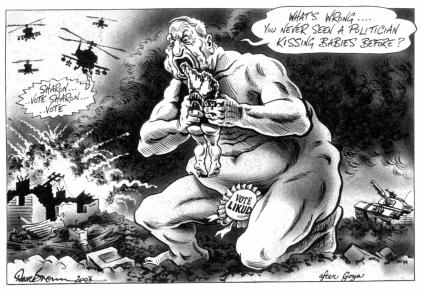
The UK's Political Cartoon Society first prize winner in its 2003 "Cartoon of the Year" competition - yes, offensive cartoons have been around awhile. (Ariel Sharon saying, "What's wrong? You never seen a politician kissing babies before?) Go to Atlas Shrugs for more anti-Jewish cartoons.

Please go to the website created by Tom Gross for a collection of very offensive cartoons that Arab publications feature on virtually a daily basis. For a culture that supposedly respects other religions, and frowns on drawing of the human form, the Arabs sure publish a lot of disrepectful anti-Jewish cartoons.

Thursday, February 23, 2006

Taking Offense Selectively - Mohammad Cartoons


Editors, the San Francisco Chronicle and the Santa Rosa Press Democrat

As Muslims kill Muslims by blowing up mosques, is it possible that some of the Korans contained therein were desecrated? If so, please tell Newsweek.Isn't there something unholy about blowing up people praying in a house of worship? Why doesn't that offend Muslims? Muslims seem very selective about being offended.

Why aren't Big Media (BM) showing us the offensive cartoons that incite "peace-loving" Muslims to kill? You see, in America, you have the right to offend me, and I have the right to be offended. Right now I'm offended by the BM exercising their right not to offend Muslims. The BM has never seemed worried about offending me, or my Jewish and Christian friends. Probably because they know that killing myself and a bunch of innocent people is not my chosen path to eternal salvation and 72 virgins. There has got to be a better way. Please keep the virgins on hold while I figure this out.

If you "journalists" are afraid of offending Muslims by printing a few innocuous cartoons, would you kindly step aside and let real journalists work?

It's The Principle That Counts - More Muhammad


Some cartoons are published in a small Danish newspaper in September, and about five months later, all Hell breaks loose and how many are killed? 45? 65? 100? The Danish Cartoon Death Toll is hard to pin down, but one death because Muslims have selective outrage is one too many. (Update: With the ongoing carnage in Nigeria, the Danish Cartoon Death Toll worldwide is at least 200 and is probably still rising.)

Muslims are blowing up mosques all over Iraq, and Muslims worldwide are not outraged.

If, on one hand, they demand respect for their "religion of peace" by beheading anyone who offends them in any way -- doesn't it seem that they would be really angry with anyone who destroys a mosque?

Not long ago peace-loving Muslims killed many other Muslims when Newsweek published an erroneous report of Quran desecration. If Muslims burn and blow up mosques, it seems logical that the Qurans therein would be burned and blown up too. In other words, Quran desecration to the max!

I guess when Muslims are not beheading cartoonists, performing "honor killings" of women raped by their brothers-in-law, blowing up innocent women and children (and men too) in Bali, Morocco, London, Madrid, Beslan, raping and murdering their way through Darfur, etc., they are pretty peace loving -- and they will kill anyone who says otherwise.

Wednesday, February 22, 2006

Your Daily Muhammed


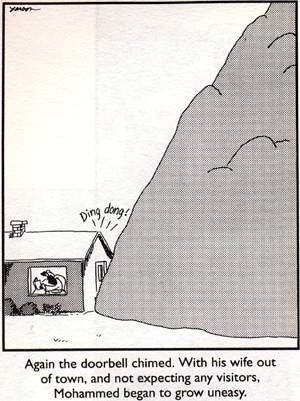
"If the mountain will not come to Muhammed, Muhammed will go to the mountain."

Tuesday, February 21, 2006

Muhammed - R-E-S-P-E-C-T


Respect is a two-way street, right?

This cartoon courtesy of the Muhammed Image Archive compiled by Zombie Time.
Go there to observe the depth and extent of Muslim hypocrisy.

Sunday, February 19, 2006

'Pappy' Shot Down by Campus Ignoramuses

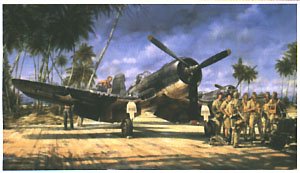
Few fighter squadrons in U.S. history ever became household names across the globe. Marine fighting squadron 214, better known as the "Black Sheep", was certainly one of those rare groups! Led by the always colorful and sometimes controversial Greg "Pappy" Boyington, the intrepid men of the Black Sheep established a highly outstanding record in the South Pacific skies, "often outnumbered, but never outfought", as their Presidential Unit Citation proudly reads.
Artist John D. Shaw now salutes this truly legendary group in the above painting.

The following article is from the Wall Street Journal Online. Just when you think the leftist indoctrination on our college campuses has hit rock bottom with nut cases like Ward Churchill, the history challenged little darlings dig deeper. This has got to be as low as they go, isn't it?

It's well known that college students today aren't as educated in our nation's history as they should be, but it's still hard to grasp the mind-bending political correctness just displayed by the University of Washington's student senate at its campus in Seattle.

The issue before the Senate this month was a proposed memorial to World War II combat pilot Gregory "Pappy" Boyington, a 1933 engineering graduate of the university, who was awarded the Congressional Medal of Honor for his service commanding the famed "Black Sheep" squadron in the Pacific. The student senate rejected the memorial because "a Marine" is not "an example of the sort of person UW wants to produce."

Digging themselves in deeper, the student opponents of the memorial indicated: "We don't need to honor any more rich white males." Other opponents compared Boyington's actions during World War II with murder.

"I am absolutely bewildered that the Student Senate voted down the resolution," Brent Ludeman, the president of the UW College Republicans, told me. He noted that despite the deficiencies of the UW History Department, the complete ignorance of Boyington's history and reputation by the student body was hard to fathom. After all, "Black Sheep Squadron," a 1970s television show portraying Colonel Boyington's heroism as a pilot and Japanese prisoner of war, still airs frequently on the History Channel. Apparently, though, it's an unusual UW student who'd be willing to learn any U.S. history even if it's spoonfed to him by TV.

As for the sin of honoring a rich white male, Mr. Ludeman points out that Boyington (who died in 1988) was neither rich nor white. He happened to be a Sioux Indian, who wound up raising his three children as a single parent. "Colonel Boyington is luckily not around to see how ignorant students at his alma mater can be today," says Kirby Wilbur, a morning talk show host at Seattle's KVI Radio. Perhaps the trustees and alumni of the school will now help educate them.
-- John Fund

Saturday, February 18, 2006

At Least We Do Agree To Disagree

(Often letters to The Editor of the Independent Coast Observer (ICO), our Gualala, California weekly newspaper, are very personal, and I am pleased to be able to share some of the letters and my responses. The Wise but wrong letter below was in the 17 February 2006 ICO, and was in response to a letter Alice wrote in response to an earlier letter to me. I also responded to that earlier letter, but my response did not run in the ICO. Pity. My attempt at poetry wasted.)

Wise but wrong

Editor:

While suffering through the winter here on the Big Island of Hawaii, I was amused, when catching up on the home news in the ICO, to read Alice Combs' letter complaining of the ignorance of some readers to her husbands' mental capacities. Now, I don't know Mr. Combs personally, but from reading his contributions to the letters depart­ment in the ICO over these past years I am highly im­pressed that such a wise and learned man could produce such wrong thinking.

That someone with such vast learning experience, not to mention a Lions Club vol­unteer, and a lover of chil­dren, could be incorrect in his vision of the world is, of course, not unusual. One could find countless ex­amples on both sides of the fence (post).

Conversely, the inverse also applies. Many of the world's best thinkers and leaders had little for­mal education, not to men­tion the fact that they never read Time magazine or picked up papers along Highway 1.

As soon as I get home in March, just in case, I plan to go out to the Stornetta Park, pick up some trash, and then get some serious reading done. Then maybe I'll have some credibility around here (there).


Editor

Steve, thank you for your courageous stand for press freedom, and thanks to Steve Finz for inviting me to make a joint statement for freedom.

I lived on Oahu through four winters myself, so I can just imagine Rickey Wasserman’s suffering through this winter on the Big Island. From Mr. Wasserman’s observation about how impressed he is about how a person of my abilities could produce so much wrong thinking and incorrect world vision, I must assume that Mr. Wasserman does not agree with most or all of my beliefs. Since Mr. Wasserman did not mention any specific issues, I am left to speculate about areas of disagreement. From what he has gleaned from my letters, Mr. Wasserman must object to a strong national defense, and must favor higher taxes and larger government. He must also applaud hypocritical Democratic leaders, because I frequently write about how Democrats oppose President Bush when he does things for which they applauded Bill Clinton. For examples, attacks on nations like Iraq and Bosnia that didn’t attack us first, and doing it without forming a United Nations coalition. Or warrantless wiretaps.

Of course Mr. Wasserman would oppose winning the war on terrorism. Or reauthorizing the Patriot Act, just cleared by a 96-3 vote for Senate approval. Since I am for them, he must also be against the Free Trade agreements. I believe in personal freedom and responsibility – I wonder if Mr. Wasserman thinks that is mistaken too?

He probably does, since the positions I attribute to him mark Mr. Wasserman as a liberal Democrat. Perhaps I have been unfair to Mr. Wasserman. I certainly know very little about him, obviously less than he knows of me. But logically, if he thinks me a “wrong thinker,” then he must disagree with my beliefs. Or maybe he just thinks I’m wrong, and takes no position himself. That approach could go a long way towards explaining the incoherence of Democrats.

Friday, February 17, 2006

Stand up for Freedom


Editor

Though it may come as a surprise to many, we are in complete agreement with each other regarding the controversy raging around the satirical cartoons depicting Muhammad. Politicians all the way up to the Secretary General of the United Nations have been using the phrase “freedom with responsibility” in their attempt to be all things to all people. We do not believe freedom of expression includes a responsibility to avoid insulting or offending anyone. We jointly urge the ICO to express solidarity with media all over the world in support of free expression by reprinting the cartoons that originally appeared in Danish publications and that protestors found so offensive.

Michael B. Combs, Gualala
Steven Finz, Sea Ranch

(Published in the ICO on 17 February 2006, accompanied by a "Press Freedom" editorial by Editor Steve McLuaghlin and this Danish cartoon)