A long time ago when the World was young, two momentous events resulted in Alice and I both reaching eighty years of age this year. Alice, being more impatient, reached 80 first in March, provoking her beautiful daughters, Jeanette and Debbie, to fill our Gualala home with celebrants.
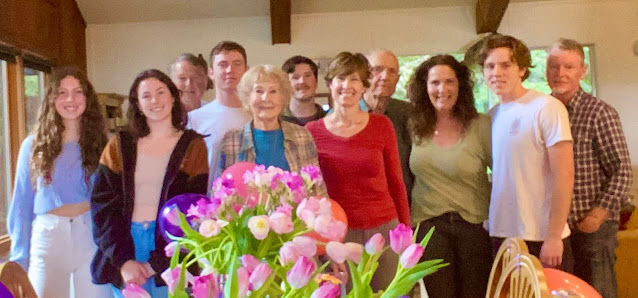
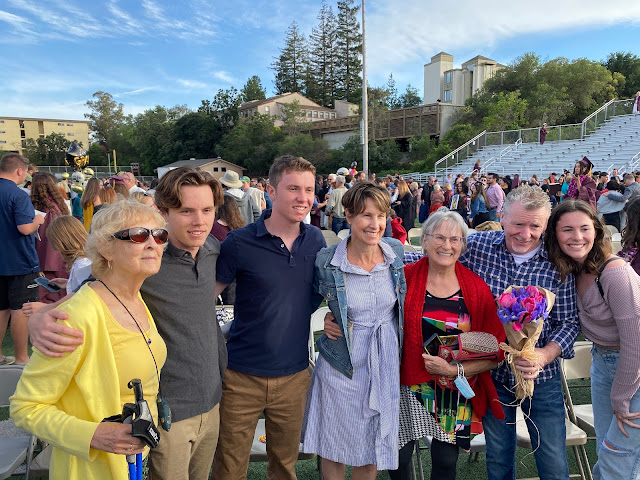
Granddaughters Josie and Savannah, Me, Grandson Daniel, Alice, Grandson Kevin, Jeanette, First Husband Hans, Debbie, Grandson Jack, Son-in-law Kieran
If asked about this family birthday photo, Alice would say that it “tickles her tummy.” Hans and I are retired, Hans from captaining the Larkspur ferry, me from the Air Force and sundry other activities. Alice is semi-retired from the very successful corporation she founded, Vulcan Wire. Jeanette, Kieran, and Debbie are gainfully employed, as is eldest grandson Kevin in commodities and landlording in Minneapolis. Savannah, Daniel, Jack, and Josie are in a variety of college pursuits. We recently visited Savannah in Charleston, South Carolina, where she is in a graduate nursing program.
Birthday Girl
Each candle is doing the work of ten!
When my turn came in July, Alice pulled out all the stops, rented the Gualala Community Center, had Leslie Bates cater heavy hors d'oeuvres, and hosted a hundred of our friends and family. Almost all family from her birthday attended plus my younger brother Ron and wife Kathy.
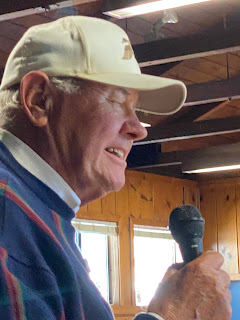
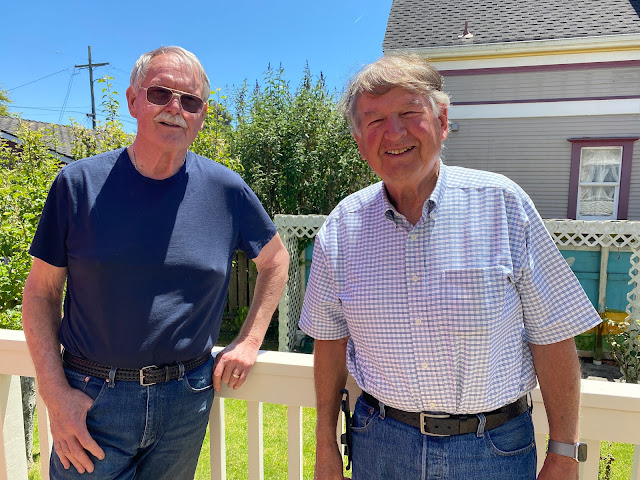
Andy Johnston telling tall tales about our Good Old Days
Also well represented were my Lions and Rotary friends, fellow musical performers, neighbors, and buddy Andy Johnston, who I first “met” in 1958 as we knocked each other around playing high school eight-man football, Laytonville vs. Point Arena. Andy and I faced each other twice, in 1958 and 1959, and my team lost both times. Andy makes sure I never forget.
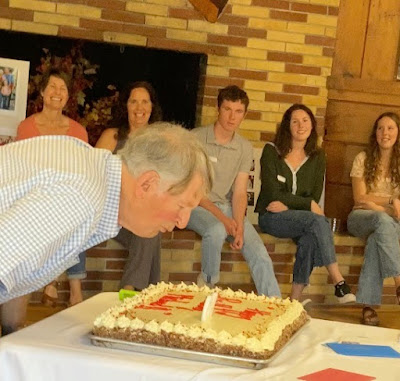
Birthday Boy is undaunted by the huge candle
and enormous (full sheet) carrot cake
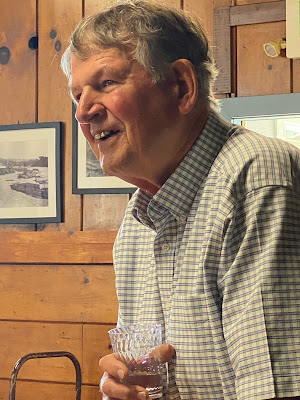
Leading a Martinelli apple juice toast
With help from Chucky at Gualala Market, guests could also imbibe wine and beer
In January my eldest son Bruce and wife Lisa visited us in Gualala for the first time. Bruce hadn’t been in the area since we all visited my Pop and stepmother Ruth in Point Arena when we came back from Hawaii in 1982. My younger sons Scott and Jeffrey haven’t been here since then, but we hope Jeffrey can visit in January.
During the year we made frequent trips to our closest metropolis, Santa Rosa (75 miles away), for medical matters. Alice fortunately had minor cataracts that required cornea replacement surgery, as I had two years ago. Her eyesight is now that of a 26-year old. However, another problem, a pinched nerve in her back radiating pain to her right leg, is still in the process of repair.
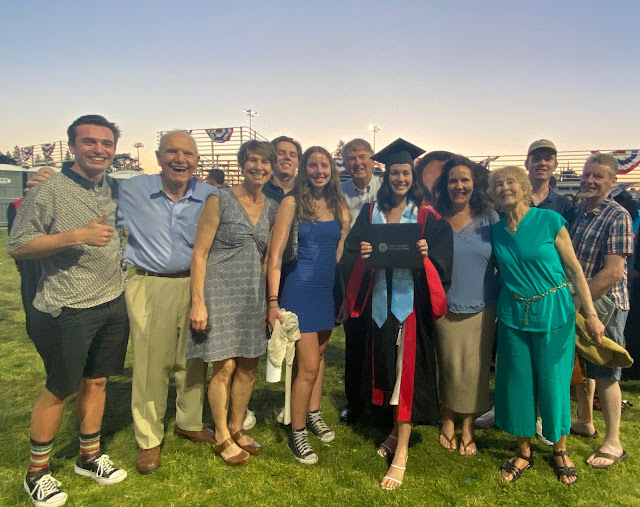
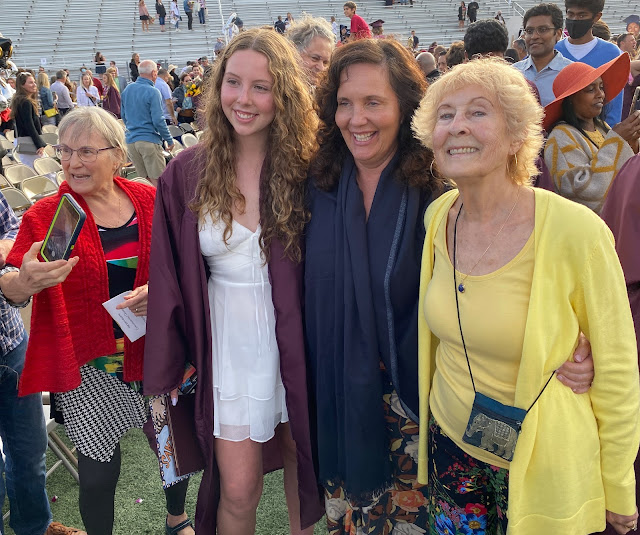
May was a busy month with trips to Chico for Savannah's graduation from Chico State's nursing school and then to Walnut Creek for Josie's graduation from Las Lomas High School.
Savannah's boyfriend Eric, Hans, Jeanette, Jack, Josie, Me, Savannah, Debbie, Alice, Daniel, Kieran
Good friend and neighbor Donna, Josie the Graduate, Debbie, and Alice
Alice, Jack, Daniel, Jeanette, Donna, Kieran, and Savannah
Ron and I. I was much bigger than Ron - his nicknames were "Peanuts" and later "Runt" - until about age 13, then he passed me and grew to 6' 5" as I stopped at 6' 2". Some much shorter friends still call him "Runt"
In June we visited my younger brother Ron and his wife Kathy at their home in Eureka for his 79th birthday. Every year we spend almost a month the same age because the doctor told Mom that she couldn't have any more children after I was born caesarean. Mom didn't want me to be a lonely, only child, and told that doctor, "Put a zipper in that incision, I'll be right back." Eleven months and four days later brother Ronald was born, the most wonderful gift Mom and Pop ever gave me.
We ended this short trip with a visit to my middle son, Scott, in nearby Fortuna.
A very good friend, Dick Soule, turned 100 the day after I did 80, and my Gualala Rotary Club honored him and his sweet wife Ellen at a luncheon meeting in the Gualala Community Center.
In August we went to Claremont for a Celebration of Life memorial for Alice's dear friend of almost sixty years, Miranda Chan, hosted by her daughters Yun-Lan and Oi-Lan. Then we went to Beverley Hills and the La Brea tar pits that have fascinated me ever since I read about them in grammar school over seventy years ago. Although Alice was an early Valley Girl, living in Tarzana and going to school and college until she married Hans in 1962, and I was born in nearby Torrance and lived a couple of years in Long Beach, we didn't recognize anything but agreed that Hollywood had seen better days. And we had fun regardless. We continued our Gualala routine of walking about three miles every day.
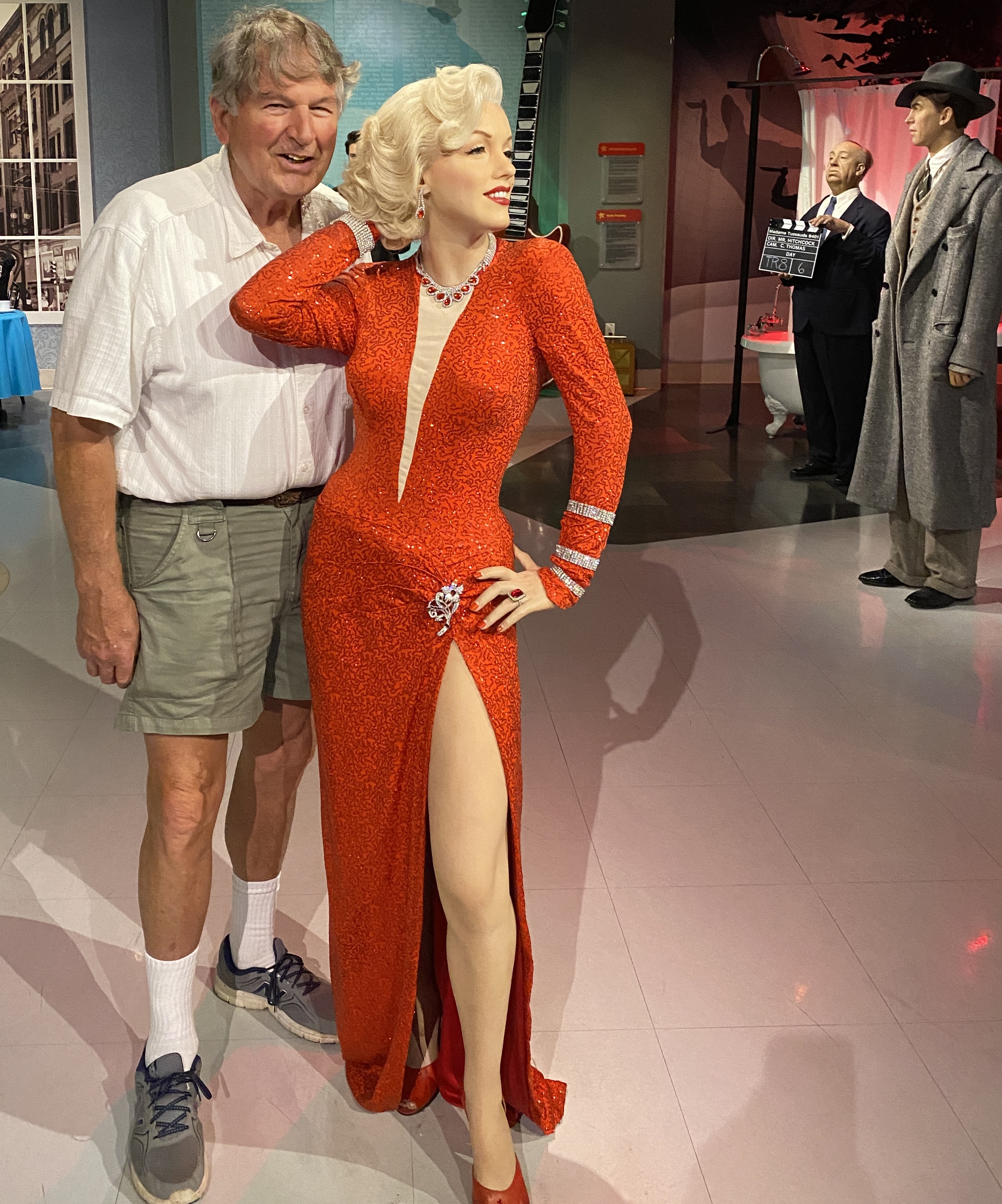
We went to Madame Tussaud’s and recognized almost all the celebrates depicted as long as they were famous over fifty years ago.
As I was making moves on Marilyn – watched by Alfred Hitchcock and Jimmy Stewart - Alice and John Travolta were steppin’ out.
The travel bug bit again – it’s actually been attacking us since we got the first of our five Covid shots in January 2021, so in September we went to Kiawah Island near Charleston, SC. Besides many miles of sandy beaches, the island is composed of golf courses garnished with tennis courts. Since we don’t indulge in golf and tennis, we had the most interesting parts of the island all to ourselves – especially when Hurricane Ian arrived, as a tropical storm, and all the restaurants and the premier hotel closed. What was left of Ian passed directly over us with some strong wind gusts that blew a few branches off trees and delivered 3.5 inches of rain. A stronger storm hit Gualala in mid-September and did not cause us to change any of our daily walks and playing ball with Radar on Cook’s Beach.
With the empty prestigious Sanctuary Hotel behind Alice, we awaited what was left of Hurricane Ian on an otherwise totally deserted eight-mile sandy beach
The view from our villa. Alice loved the screened deck, but especially valued having two bath rooms, so that will be a requirement for future trips like our Barbados vacation this coming February.
The view from our deck. The fawn didn’t molest the alligator.
We spotted Albert sunning near a bike path as we peddled
I assembled and mailed out over 225 Christmas cards and hope that none will be returned with the notation "No forwarding address on file."
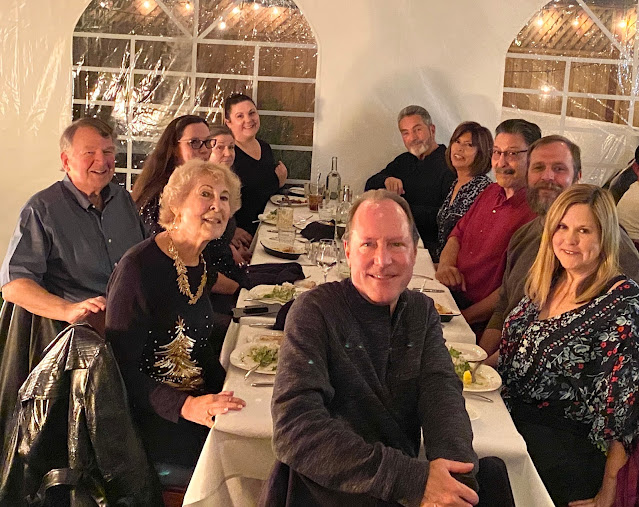
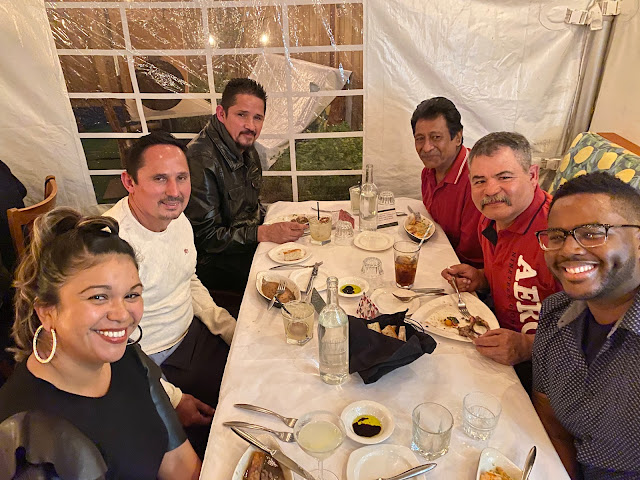
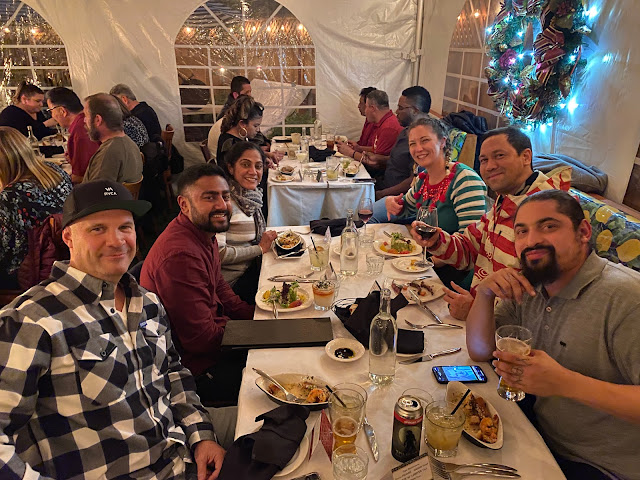
Vulcan Wire, Inc., the company Alice founded in the 1970's, had its annual Christmas party at Paradiso Restaurant, San Leandro. hosted by CEO Mike Graffio. You can read all about it in Alice's memoir, The Lady With Balls.
From left, me, Alice, Jennifer Stafford and Edward Valenzuela (across from each other), Nicole Clark and her Mom, Mike Graffio, Chuck and Teresa Rodrigues, Steve and Cindy Brandt
From left, Deena Shine across from husband Nick, brothers Salvador and Gerardo Martinez,
brothers Victor and Hector Hernandez
From left, Nate Rowland, Smita Patel and son, Kenji and Shauna Rodriguez, Pepe Balderrama
Of course I will be updating this Christmas letter as we celebrate Gualala Rotary and Lions holiday festivities, and wrapping up this Christmas with family cheer in Walnut Creek and Lafayette.
To my schoolmates from Point Arena High School, I plan our reunion July 22 at the Gualala Community Center and hope to hear from all who can make it - and from those who can't.
Merry Christmas to all, and to all a good year!
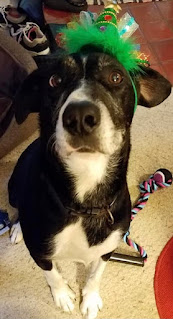
Radar says "Woof (Party!)"