Would I do it again?
Looking back now, the only thing I would change is my age. Make me twenty again, with a stripe on my sleeve, my duffle bag on my shoulder, and permanent change of station orders in my hand.
Heaven to me is doing it all over again, going back to the bases, seeing my friends, having the bull sessions, and then seeing all the places I missed the first time around. It was a very rich life, and we will never see the like of it again.
Most of the bases are closed now, the aircraft retired and salvaged, and the people the same. When I went back to Bentwaters in England, my favorite base and assignment, it had been closed several years. I felt an enormous loss and sadness, because a closed base quickly loses its aura of the people once stationed there, and of what they did and how they did it.
That base was once a true city, but now is a ghost town, one whose ghostly inhabitants were dispersed to far off places, taking their memories with them. When I stood there on the lonely base, no one was around to say "remember when?"
Only me.
And then I was gone.
Showing posts with label Philosophy. Show all posts
Showing posts with label Philosophy. Show all posts
Saturday, October 04, 2008

Saturday, September 27, 2008
Friends for Life - A Love That Cannot End
This morning I drove amongst towering redwoods overlooking the Pacific not far from Alice and my home here in Northern California. For a moment I thought that my surroundings couldn't get more beautiful, and then "Amigos para siempre (Friends for life)" sung by Sarah Brightman and José Carreras played on my iPod through the car radio - a sight, sound, and memories masterpiece!
All my senses were engaged, and then I heard the verse: "Amics per sempre, means a love that cannot end," and I beheld a vision of Alice.
A couple of weeks ago we traveled in Guatemala. As we toured a museum in Antigua, I saw a delightfully sweet mural painted on the wall of an attached school playground. Alice and I had been traveling for almost two weeks, and we were both missing Buddy. As I looked at the mural, the dog on the left reminded me of our little "friend for life."
Here it is.

All my senses were engaged, and then I heard the verse: "Amics per sempre, means a love that cannot end," and I beheld a vision of Alice.
A couple of weeks ago we traveled in Guatemala. As we toured a museum in Antigua, I saw a delightfully sweet mural painted on the wall of an attached school playground. Alice and I had been traveling for almost two weeks, and we were both missing Buddy. As I looked at the mural, the dog on the left reminded me of our little "friend for life."
Here it is.

Friday, September 12, 2008
Che Lives! (In Our Colleges, Anyway)

Che Lived! Che Lives! Che will never die!
Che lives. But in Guatemala, Che only lives on T-shirts sold in T-shirt shops which are usually located next to a McDonalds, a Burger King, Domino’s Pizza, etc., or a distinctive and very successful Latin-American fast-food chain founded in Guatemala over thirty years ago, Pollo Campero.
The face of Che is ubiquitous, but his beliefs aren't.
“Communism was a great system for making people equally poor. In fact, there was no better system in the world for that than communism.” Extolling Globalization, Thomas L. Friedman wrote this in “The World is Flat,” and added that “Capitalism made people unequally rich.”
Besides totally agreeing with Friedman, I would extend his assessment to communism’s bastard step-child, socialism, and add that capitalism succeeds wherever it is tried.
Of course there are many true believers in Communism, but few of them live in the former citadels of Communism, the Soviet Union and China. Even most North Koreans and Cubans have lost their Marxist zeal; they saw their countries go from the theory of the dictatorship of the proletariat to the deification of dictators. But now the Gods of Communism are either dead, discredited, or disregarded: Marx, Engels, Lenin, Stalin, Kim Jong Il, Mao, Castro, and Kim Il Sung.
I've seen some of their statues already on junk piles, and look forward to see others added to the trash heap of history. How delightful to think of Mao in his mausoleum observing China's mad race down the capitalist road Mao devoted his life and the deaths of a hundred million Chinese to stop.
Now the only place communism and socialism are valued and revered are amongst ignorant and illiterate peoples of undeveloped countries, and in the halls of academia amongst Progressive economists, environmentalists, and anti-Globalizationists.
They and Che are good company.
Sunday, April 27, 2008
Everything I Know I Learned While Fishing
It’s a good thing I did a lot of fishing when I was young, and learned everything then, because sad to say I haven’t done much fishing for many years now.
When I was a school boy in Point Arena, 1949-1960, I never thought about going fishing, I just went. Unlike modern-day anglers, or even many during my boyhood, fishing only required a minimum of equipment (meaning it only required a minimum of cash), and a lot of time. Time I had, money I didn’t, so fishing was a perfect choice.
As a pre-teen, fishing consisted of catching trout in Point Arena Creek (also known as Shit Creek, because the waste water from the sewer ponds went into it, or Sweetwater Creek, again because the waste water from the sewer ponds went into it), which flowed along the southern edge of town.
Sweetwater Creek was small. You could step across it in most places. Its banks were well protected with stinging nettles growing amongst the thick willows. About two-thirds of the way up Mill Street the creek went over a small falls, only about a three-foot drop, but that was enough to stop the trout from going further upstream.
We soon stopped fishing further upstream and just concentrated on a half-mile stretch from the falls to where Soldani’s cattle made a crossing about a hundred yards from the sewer ponds. At that point there was still over a half mile of creek between the sewer ponds and the ocean, but we never fished down there.
I guess the thought of catching fish swimming amongst sewer pond overflow put us off.
We never talked about it, we just never went there.
The trout fishing was pretty good without expanding our territory.
We outfitted ourselves with wrapping string for fish line that we begged from whoever was working the counter at Gilmore and Stornetta’s General Merchandise Store. In the 1950s, many of the things we bought at the store were wrapped in paper and tied with string. We would tie the string to a four to five-foot willow pole, tie a leader with hook to the string, and as soon as we dug a couple of dozen worms we were ready to fish.
A note for the historical record.
Usually it was Jackie Gilmore or his wife, Sue, or my buddy Bob Seymour’s mother, Floe, working the cash register. For several years, Taylor and Doris York, the parents of my fishing buddy, Chuck York, worked in the store before they took over running Titus’ Sweet Shop. Doris was one of Jackie’s older sisters. Her sister Merle, and Merle’s husband Wendy May, also worked in the store. Now and then we would be waited on by one of Jackie’s parents, Orin or Leona Gilmore, although they owned the store and spent most of their time in the raised office area a third of the way in on the right-hand side.
In those days, in the little town of Point Arena, this small general merchandise store provided the total financial support for four or five families. Then there was the McMillen General Store just down the street, and it supported another four families. As times passed, and their competition became the national retailers in Santa Rosa seventy-five miles away (almost a two-hour drive), profit margins were squeezed and eventually the two stores barely supported one family each as owner/operators. Finally the out-of-area big stores like Costco, then the added competition of the Internet, only left a market big enough for one store to survive, and Jackie and Sue closed Gilmore’s, then later sold it and the building was converted into the Coast Community Library.
Back to fishing.
Most of the good fishing spots on Sweetwater Creek were easy to reach, particularly when we were careful not to brush the stinging nettles. We approached each fishing hole quietly. Most of them weren’t much bigger than a large bathtub. We put a worm on the hook, and then tossed it into the water. Usually something happened immediately.
Often our worm would be swarmed by sticklebacks, minnow-sized fish with three needle-sharp spines on their backs that would nibble and worry the worm until it was torn from the hook. When it looked like stickleback were hitting the worm, we would pull it out of the water, usually with a stickleback or two hanging on, and let the sticklebacks fall off on the ground, and eventually die.
We would toss the worm back in, or rebait our hook if necessary, and hope that a trout would get to it first instead of the sticklebacks. As soon as a trout struck the bait, we would bring the tip of our willow pole fishing rod up to set the hook, because the trout would spit the worm out immediately otherwise.
If we were successful hooking the trout, a short battle would ensue. Our main concern was keeping the trout from wrapping the line around underwater roots, while also keeping it from catching in the branches above. If we could prevent entanglements, the trout was quickly ours.
As much as we learned stalking the wily trout, our real education began with ocean fishing, usually from the Point Arena Wharf or the rocks north of the wharf. We usually caught perch or greenling (sea trout) from the wharf, and perch, greenling, and cabazone or the occasional ling cod from the rocks.
Our fishing gear was very inexpensive because of the continuing chronic cash shortages. Our biggest investment was a 100-yard ball of braided cotton line (90¢), and a dozen leaderless 6/0 black hooks (25¢). Bait was abalone guts and trimmings preserved with rock salt we collected and stored in a large crock, and took fishing in a coffee can. For sinkers we went to the local gas service stations. The mechanic at Pelascio’s Union 76 station, the late Jimmy Morrison, would toss old spark plugs replaced during engine tune-ups into a box in the garage, and we took what we needed for sinkers. Our tackle boxes were gunny sacks, and the only additional gear we needed we found on the rocks, pieces of drift wood to wrap our lines.
Casting our lines was simple. We would unwind line from the stick, being careful not to tangle or catch in on the rocks or around our feet, then swing the line with hook, bait, and sinker over our heads, then release it hopefully to fly out and land where we intended. We tried to hit deeper holes between patches of seaweed, and if we were successful we would take in the slack and hold the line in our hand and wait.
As soon as we felt a couple of sharp tugs, we would yank the line back to set the hook, then pull it in hand over hand, dragging the fish over and through the seaweed. If all went well we would pull in a flopping fish. After we took it off the hook, which sometimes was quite a chore if the fish swallowed the bait and was hooked deeply, we put the fish in a small tide pool to keep it fresh while we continued fishing.
It was on these fishing trips on the rocks where we gained the wisdom that has guided our lives so well. Our first lesson was that whatever we needed for a successful fishing trip we had to plan and bring with us. We didn’t have a car in those days, and anything we forgot or didn’t think of was at least a round-trip hour’s walk away. The other side of the issue, of course, was that anything we brought with us we had to carry in our gunny sacks on our long walk to and from the rocks. If we had a good day fishing, the weight of the fish would be added to the weight in our sacks, so in packing to go fishing we had to make allowances for possible success and the weight of fish in our sacks.
We realized that for an overall satisfying fishing experience, we didn’t want to take everything with us, just the right things.
This then led us to the learning process we soon labeled, “If, maybe, and next time.” While we were fishing, killing time listening to the Giants on my transistor radio, or eating our lunches/snacks, while waiting for a bite, we would often remark about something: for instance, “If we carried some water with us, we sure wouldn’t be so thirsty right now.”
“Maybe we can find some bottles to fill with water.”
“Next time we’ll have water with us when we feel thirsty.”
One time we caught our late friend, Jimmy Hedden, eating our frozen bait shrimp raw.
“If we always brought a tin of kippered herring with us, maybe next time Jimmy will leave the bait shrimp alone.”
Our assumption was that we would remember to bring water in bottles, or kipper snacks, or whatever, the next time. The reality was that we would often forget what we planned, and when we were thirsty again, or run out of bait, then we would remember.
“If we would bring a piece of paper and a pencil every time, and write stuff down, then maybe we would remember it the next time.”
What this did, of course, was give us the opportunity to add a pencil and paper to the growing list of things to forget the next time.
However, as our youth passed slowly and unhurriedly, and we joked about “if, maybe, and next time,” I think we learned a lot about other people and ourselves out of the independence and challenges of our fishing experiences.
But I can hear protests from those who read this far: “My husband/significant other/boyfriend, Gavin, has started going fishing with his friends, and he isn’t acting any wiser. In fact, he seems dumber.”
I can see the problems already. Anyone named Gavin is from a generation or two after mine. Gavin and his friends were never allowed to just go fishing by themselves. They didn’t have an opportunity to scrape together a buck or two and rig a fishing outfit, then walk a mile or two to the ocean by themselves.
Gavin and his friends were organized, supervised, and authorized to go fishing. They didn’t have the exertion of walking a mile or two carrying their fishing gear, then the frustration of finding they had forgotten something, then the satisfaction of figuring how to work around whatever was forgot, the elation of doing it all themselves, and increased confidence from being at the ocean on their own.
I’ve seen fishermen who have started fishing later in life. They buy expensive, very powerful boats, outfitted with every convenience known to man, and space age fishing gear. Fishing just becomes another competition: bigger, faster, costlier – more fish are caught quicker, trophy fish are sought – and a day fishing is anything but cheap relaxation.
If the fish aren’t biting, the day’s fishing is a failure.
When we went fishing, if the fish weren’t biting we spent the time chatting and philosophizing, and still had a great time. We didn’t rush anywhere, because there was nowhere else we had to be, and we weren’t late for anything.
We would run over the rocks because it was fun, not because we had to hurry somewhere.
Our parents trusted us not to do anything dumb enough to get ourselves killed or badly injured, and knew we would be home by suppertime.
Maybe even with some fish to add to the family food supply.
When I was a school boy in Point Arena, 1949-1960, I never thought about going fishing, I just went. Unlike modern-day anglers, or even many during my boyhood, fishing only required a minimum of equipment (meaning it only required a minimum of cash), and a lot of time. Time I had, money I didn’t, so fishing was a perfect choice.
As a pre-teen, fishing consisted of catching trout in Point Arena Creek (also known as Shit Creek, because the waste water from the sewer ponds went into it, or Sweetwater Creek, again because the waste water from the sewer ponds went into it), which flowed along the southern edge of town.
Sweetwater Creek was small. You could step across it in most places. Its banks were well protected with stinging nettles growing amongst the thick willows. About two-thirds of the way up Mill Street the creek went over a small falls, only about a three-foot drop, but that was enough to stop the trout from going further upstream.
We soon stopped fishing further upstream and just concentrated on a half-mile stretch from the falls to where Soldani’s cattle made a crossing about a hundred yards from the sewer ponds. At that point there was still over a half mile of creek between the sewer ponds and the ocean, but we never fished down there.
I guess the thought of catching fish swimming amongst sewer pond overflow put us off.
We never talked about it, we just never went there.
The trout fishing was pretty good without expanding our territory.
We outfitted ourselves with wrapping string for fish line that we begged from whoever was working the counter at Gilmore and Stornetta’s General Merchandise Store. In the 1950s, many of the things we bought at the store were wrapped in paper and tied with string. We would tie the string to a four to five-foot willow pole, tie a leader with hook to the string, and as soon as we dug a couple of dozen worms we were ready to fish.
A note for the historical record.
Usually it was Jackie Gilmore or his wife, Sue, or my buddy Bob Seymour’s mother, Floe, working the cash register. For several years, Taylor and Doris York, the parents of my fishing buddy, Chuck York, worked in the store before they took over running Titus’ Sweet Shop. Doris was one of Jackie’s older sisters. Her sister Merle, and Merle’s husband Wendy May, also worked in the store. Now and then we would be waited on by one of Jackie’s parents, Orin or Leona Gilmore, although they owned the store and spent most of their time in the raised office area a third of the way in on the right-hand side.
In those days, in the little town of Point Arena, this small general merchandise store provided the total financial support for four or five families. Then there was the McMillen General Store just down the street, and it supported another four families. As times passed, and their competition became the national retailers in Santa Rosa seventy-five miles away (almost a two-hour drive), profit margins were squeezed and eventually the two stores barely supported one family each as owner/operators. Finally the out-of-area big stores like Costco, then the added competition of the Internet, only left a market big enough for one store to survive, and Jackie and Sue closed Gilmore’s, then later sold it and the building was converted into the Coast Community Library.
Back to fishing.
Most of the good fishing spots on Sweetwater Creek were easy to reach, particularly when we were careful not to brush the stinging nettles. We approached each fishing hole quietly. Most of them weren’t much bigger than a large bathtub. We put a worm on the hook, and then tossed it into the water. Usually something happened immediately.
Often our worm would be swarmed by sticklebacks, minnow-sized fish with three needle-sharp spines on their backs that would nibble and worry the worm until it was torn from the hook. When it looked like stickleback were hitting the worm, we would pull it out of the water, usually with a stickleback or two hanging on, and let the sticklebacks fall off on the ground, and eventually die.
We would toss the worm back in, or rebait our hook if necessary, and hope that a trout would get to it first instead of the sticklebacks. As soon as a trout struck the bait, we would bring the tip of our willow pole fishing rod up to set the hook, because the trout would spit the worm out immediately otherwise.
If we were successful hooking the trout, a short battle would ensue. Our main concern was keeping the trout from wrapping the line around underwater roots, while also keeping it from catching in the branches above. If we could prevent entanglements, the trout was quickly ours.
As much as we learned stalking the wily trout, our real education began with ocean fishing, usually from the Point Arena Wharf or the rocks north of the wharf. We usually caught perch or greenling (sea trout) from the wharf, and perch, greenling, and cabazone or the occasional ling cod from the rocks.
Our fishing gear was very inexpensive because of the continuing chronic cash shortages. Our biggest investment was a 100-yard ball of braided cotton line (90¢), and a dozen leaderless 6/0 black hooks (25¢). Bait was abalone guts and trimmings preserved with rock salt we collected and stored in a large crock, and took fishing in a coffee can. For sinkers we went to the local gas service stations. The mechanic at Pelascio’s Union 76 station, the late Jimmy Morrison, would toss old spark plugs replaced during engine tune-ups into a box in the garage, and we took what we needed for sinkers. Our tackle boxes were gunny sacks, and the only additional gear we needed we found on the rocks, pieces of drift wood to wrap our lines.
Casting our lines was simple. We would unwind line from the stick, being careful not to tangle or catch in on the rocks or around our feet, then swing the line with hook, bait, and sinker over our heads, then release it hopefully to fly out and land where we intended. We tried to hit deeper holes between patches of seaweed, and if we were successful we would take in the slack and hold the line in our hand and wait.
As soon as we felt a couple of sharp tugs, we would yank the line back to set the hook, then pull it in hand over hand, dragging the fish over and through the seaweed. If all went well we would pull in a flopping fish. After we took it off the hook, which sometimes was quite a chore if the fish swallowed the bait and was hooked deeply, we put the fish in a small tide pool to keep it fresh while we continued fishing.
It was on these fishing trips on the rocks where we gained the wisdom that has guided our lives so well. Our first lesson was that whatever we needed for a successful fishing trip we had to plan and bring with us. We didn’t have a car in those days, and anything we forgot or didn’t think of was at least a round-trip hour’s walk away. The other side of the issue, of course, was that anything we brought with us we had to carry in our gunny sacks on our long walk to and from the rocks. If we had a good day fishing, the weight of the fish would be added to the weight in our sacks, so in packing to go fishing we had to make allowances for possible success and the weight of fish in our sacks.
We realized that for an overall satisfying fishing experience, we didn’t want to take everything with us, just the right things.
This then led us to the learning process we soon labeled, “If, maybe, and next time.” While we were fishing, killing time listening to the Giants on my transistor radio, or eating our lunches/snacks, while waiting for a bite, we would often remark about something: for instance, “If we carried some water with us, we sure wouldn’t be so thirsty right now.”
“Maybe we can find some bottles to fill with water.”
“Next time we’ll have water with us when we feel thirsty.”
One time we caught our late friend, Jimmy Hedden, eating our frozen bait shrimp raw.
“If we always brought a tin of kippered herring with us, maybe next time Jimmy will leave the bait shrimp alone.”
Our assumption was that we would remember to bring water in bottles, or kipper snacks, or whatever, the next time. The reality was that we would often forget what we planned, and when we were thirsty again, or run out of bait, then we would remember.
“If we would bring a piece of paper and a pencil every time, and write stuff down, then maybe we would remember it the next time.”
What this did, of course, was give us the opportunity to add a pencil and paper to the growing list of things to forget the next time.
However, as our youth passed slowly and unhurriedly, and we joked about “if, maybe, and next time,” I think we learned a lot about other people and ourselves out of the independence and challenges of our fishing experiences.
But I can hear protests from those who read this far: “My husband/significant other/boyfriend, Gavin, has started going fishing with his friends, and he isn’t acting any wiser. In fact, he seems dumber.”
I can see the problems already. Anyone named Gavin is from a generation or two after mine. Gavin and his friends were never allowed to just go fishing by themselves. They didn’t have an opportunity to scrape together a buck or two and rig a fishing outfit, then walk a mile or two to the ocean by themselves.
Gavin and his friends were organized, supervised, and authorized to go fishing. They didn’t have the exertion of walking a mile or two carrying their fishing gear, then the frustration of finding they had forgotten something, then the satisfaction of figuring how to work around whatever was forgot, the elation of doing it all themselves, and increased confidence from being at the ocean on their own.
I’ve seen fishermen who have started fishing later in life. They buy expensive, very powerful boats, outfitted with every convenience known to man, and space age fishing gear. Fishing just becomes another competition: bigger, faster, costlier – more fish are caught quicker, trophy fish are sought – and a day fishing is anything but cheap relaxation.
If the fish aren’t biting, the day’s fishing is a failure.
When we went fishing, if the fish weren’t biting we spent the time chatting and philosophizing, and still had a great time. We didn’t rush anywhere, because there was nowhere else we had to be, and we weren’t late for anything.
We would run over the rocks because it was fun, not because we had to hurry somewhere.
Our parents trusted us not to do anything dumb enough to get ourselves killed or badly injured, and knew we would be home by suppertime.
Maybe even with some fish to add to the family food supply.
Monday, March 03, 2008
Cuba? Who Gives a Rat’s Patootie?
An article in Time Magazine suggested we would blow a golden opportunity if we didn’t take advantage of Fidel’s retirement and end the embargo of Cuba. Apparently it is felt that if we take that step, Raul Castro and his clique will ease their draconian rule over Cuba, and soon Cuba will be like Key West but just further south.
Why in the name of anything and all that makes sense would we want to do that? For almost fifty years Cuba has been a laboratory study of all that is wrong, and can go wrong if a country goes and stays communist.
Every day Cuba teaches us Communism 101: “What is bad about Communism, and what is even worse.”
Even better, Cuba provides a place for our Left to go on a pilgrimage. Several old Lefties from northern California have gone there, even before Michael Moore, and have come back singing Cuba’s praises. They were particularly impressed by how everyone has an education (although they didn’t say anything about how no one was paid a living wage), and they were impressed with universal healthcare (but said little about the lack of modern medical equipment and supplies).
They absolutely fumed and fulminated when I brought up recent information that Cuban prostitutes working foreign tourist areas had incomes many times higher than Cuban doctors or teachers. Many times higher, in fact, than any Cuban except the top Cuban leaders, who have done quite well even in the face of their countrymen’s crushing poverty.
The poverty of the Cuban people is not just the poverty of material things. It is also the poverty of deprivation of the intellect and the soul. Cubans can’t read freely, can’t speak freely, can’t worship freely, can’t travel freely, can’t surf the internet freely, and have no choice of leaders or of how they are led. Cuban prisons are full of Cubans whose only crime was criticizing their leaders.
The old joke: an American in Cuba tells a Cuban, “In the United States we are free to say that our President is a fool.”
The Cuban replies: “It’s the same for us in Cuba. We are free to say that your President is a fool too.”
If we change towards Cuba and let Cuba become just another capitalist success story, where will people go to find out what a failure Communism is?
Already I hear people say that China is prospering under Communism. I’ve heard it said that China shows how much better central planning and control works than our chaotic capitalism. However, those commenters seem ignorant that the Chinese government is doing all they can, legal and otherwise, to transform or close their SOE’s (the old State-Owned Enterprises).
They are also ignorant that China, according to a recent study by the Rand Corporation, has an unemployment rate of 23 percent. Or that the Chinese early retirement system is mandatory, and that its purpose is to get older workers off government employment so they can be paid tiny pensions.
The Chinese have “put a Chinese face on Communism,” which makes it look a lot like capitalism.
If it weren’t for Cuba (and North Korea, which we know nothing about), we ignorant Americans could easily be fooled into believing that communism is succeeding where our capitalism is failing.
Even now, as socialism enters its death throes in Europe, we’re constantly urged to copy them as if they were models of success, while their under-funded social safety nets come unraveled.
That’s why we need Cuba, to have a permanent display of “Communism under glass,” a preserved specimen of how peoples can sacrifice lifetimes in pursuit of Utopian pipe dreams.
The Cuban people seem proud of their accomplishments and our Left points with pride to Cuba, so why should we pervert their idealism and contaminate their noble experiment?
Let’s honor Fidel’s wishes and let Cuba be Cuba.
It’s the least we can do now that Fidel is too old and weak to continue leading the way to socialist nirvana.
If we don’t continue to honor Fidel, it will be like Che died for nothing.
Think how that would hurt T-shirt sales.
Why in the name of anything and all that makes sense would we want to do that? For almost fifty years Cuba has been a laboratory study of all that is wrong, and can go wrong if a country goes and stays communist.
Every day Cuba teaches us Communism 101: “What is bad about Communism, and what is even worse.”
Even better, Cuba provides a place for our Left to go on a pilgrimage. Several old Lefties from northern California have gone there, even before Michael Moore, and have come back singing Cuba’s praises. They were particularly impressed by how everyone has an education (although they didn’t say anything about how no one was paid a living wage), and they were impressed with universal healthcare (but said little about the lack of modern medical equipment and supplies).
They absolutely fumed and fulminated when I brought up recent information that Cuban prostitutes working foreign tourist areas had incomes many times higher than Cuban doctors or teachers. Many times higher, in fact, than any Cuban except the top Cuban leaders, who have done quite well even in the face of their countrymen’s crushing poverty.
The poverty of the Cuban people is not just the poverty of material things. It is also the poverty of deprivation of the intellect and the soul. Cubans can’t read freely, can’t speak freely, can’t worship freely, can’t travel freely, can’t surf the internet freely, and have no choice of leaders or of how they are led. Cuban prisons are full of Cubans whose only crime was criticizing their leaders.
The old joke: an American in Cuba tells a Cuban, “In the United States we are free to say that our President is a fool.”
The Cuban replies: “It’s the same for us in Cuba. We are free to say that your President is a fool too.”
If we change towards Cuba and let Cuba become just another capitalist success story, where will people go to find out what a failure Communism is?
Already I hear people say that China is prospering under Communism. I’ve heard it said that China shows how much better central planning and control works than our chaotic capitalism. However, those commenters seem ignorant that the Chinese government is doing all they can, legal and otherwise, to transform or close their SOE’s (the old State-Owned Enterprises).
They are also ignorant that China, according to a recent study by the Rand Corporation, has an unemployment rate of 23 percent. Or that the Chinese early retirement system is mandatory, and that its purpose is to get older workers off government employment so they can be paid tiny pensions.
The Chinese have “put a Chinese face on Communism,” which makes it look a lot like capitalism.
If it weren’t for Cuba (and North Korea, which we know nothing about), we ignorant Americans could easily be fooled into believing that communism is succeeding where our capitalism is failing.
Even now, as socialism enters its death throes in Europe, we’re constantly urged to copy them as if they were models of success, while their under-funded social safety nets come unraveled.
That’s why we need Cuba, to have a permanent display of “Communism under glass,” a preserved specimen of how peoples can sacrifice lifetimes in pursuit of Utopian pipe dreams.
The Cuban people seem proud of their accomplishments and our Left points with pride to Cuba, so why should we pervert their idealism and contaminate their noble experiment?
Let’s honor Fidel’s wishes and let Cuba be Cuba.
It’s the least we can do now that Fidel is too old and weak to continue leading the way to socialist nirvana.
If we don’t continue to honor Fidel, it will be like Che died for nothing.
Think how that would hurt T-shirt sales.
Saturday, March 01, 2008
Socialism Can’t Work
Over the Senior Spaghetti Dinner at the Druids Hall, my Liberal friends were decrying the world’s rapidly increasing population. Apocalyptic predictions were prophesized, eerily reminiscent of Paul R. Erlich’s book that bombed, “The Population Bomb.”
From the conversation at our table, possibly inspired by the Green atmosphere, Ehrlich was being recycled. According to my friends, only doom and gloom is in store for an Earth whose human population will grow from six billion to nine billion by the end of the century.
I entered the conversation by noting that wherever prosperity increases, the rate of population growth rapidly decreases. The cure to the menace troubling my Liberal friends already exists, and is being practiced. Therefore, we don’t need a great idea, or a great leader, to save us.
We’re already saving ourselves.
Of course, along our way to salvation we’ll have to discard many of our current solutions that don’t work, chief among which is socialism. Socialism sounded great when there was a large population of relatively young workers paying a large but not crushing percentage of their earnings into the pot that provided benefits of education and medical care, etc., to all. However, the percentage of the population that was older and in worsening health steadily increased over the years, creating a need for additional funds at the same time the tax-paying segment was shrinking in proportion to the whole.
The European dependency ratio – the ratio of workers to people over 65 years old – is now four to one, and by 2050 will fall to two to one. The European fertility rate is 1.52 births per female, well below the “replacement rate” of 2.1, which is considered the level needed for a stable population. However, not one European Union country has a birth rate as high as the replacement rate.
With current trends, the
I don't see how the effects of a shrinking and aging European Union population, which will be accompanied by ever increasing tax rates, can result in anything but a negative growth rate for GDP. Simply, there will be fewer people to make goods and buy products, they'll have less to spend because of increased taxes, and older people buy less of almost all things except medical care. And in the European Union, governments pay most of the medical care costs after they tax the money from their shrinking work force.
So what is the answer? I never thought you would ask.
Privatization of social security and medical care, of course.
The same laws of compounding interest that dramatically affect GDP when the difference is only one percent, have the same effects on funds invested for retirement or medical needs.
Medical insurance that pays for catastrophic injuries or illness, but has the policy holder pay routine medical costs - just as your car or home insurance doesn't pay for oil changes or plumbing repairs - would greatly reduce medical insurance costs.
Contributions to a private savings account for social security add up quickly. For example, 12.4% of an annual income of $50,000, if invested at 5 percent, would result in an estate of over $1,000,000 at retirement age. Invested in an annuity at three percent, the payout per year for 20 years would be $65,000, or about triple Social Security. If you didn't want to take chances, in case you lived to 105, your annual payout would be about $42,000, roughly double Social Security.
If you didn't make it to 105, the balance would go to your estate.
Under Social Security, if you're single and don't make it to 65, nobody gets anything. With a privatized account, if you died at 65 the $1,000,000 would go to your heirs.
The nicest benefit about privatized accounts, from the viewpoint of our nation, not the individual, is that you fund your own medical and retirement needs. Under our present system, and in the European Union, the ever shrinking current worker group is funding the medical and retirement needs for an ever growing retired group.
Those numbers just don't add up.
And will only get worse.
The Secret of World Peace Discovered over Spaghetti
At the monthly spaghetti dinner at the Druids Hall in Point Arena to raise funds for the
As is usual, I took absolutely the opposite side. I noted that the best cure for overpopulation was prosperity – it’s worked everywhere it’s been tried.
I also noted that the genius of mankind is to adapt to changing circumstances. Humans have adapted their environments to their needs more than any other living creature. We live in the hot and cold, high and low, wet and dry, in the sea and on the sea. Various other animals share these environments with us, but we’re the only one that occupies them all.
Humans are marvels of adaptation. What doesn’t work is mankind being led by a great leader, or leaders, or groups of leaders, or a great –ism; e.g. communism, socialism, Islamism, even capitalism.
What works best in the long run is the collective mind of the masses (I chose these words carefully - they seemed to fit our group), each rational member of which wants a comfortable present and a secure future. As democracy spreads and takes hold, the power of people over their governments increases, and with it the standards of living and security through the rule of law. Totalitarian nations lose sway as they weaken while democratic ones prosper. Soon the only means left to fight against democratization is terrorism, because oppressive nations like
Terrorism is the last stand for fanatics who insist on theocratic or dogmatic control over peoples. Since they are unable to change the fabric of societies, they want to tear it apart and replace individual freedom and the rule of law with the tyranny of fear. However, their existence is dependent upon the very things they attack: they hide behind civil rights established by the very rule of law they seek to eliminate.
The secret to world peace then is to do what mankind always does best - adapt to a changing environment. Our primary fear is no longer the attack from abroad from another nation/state, it's the attacks from within by terrorists with no clear links to a nation/state. Since we have lost the power to deter attacks by annihilating an attacking nation, we must develop better capabilities of identifying and monitoring suspect individuals and groups.
The spaghetti-eating group I was with last night would be appalled at my suggestion, because they believe it better to have 1,000 killed by terrorists than to infringe a civil right. On the other hand, I would rather apologize to 1,000 than overlook the terrorist that kills one innocent person. Right now we're wasting a lot of time, resources, and energy checking low- or no-threat individuals and groups so we can justify also looking at higher-threat individuals.
In terms of effectiveness, the only thing that makes sense is we identify and closely monitor all potential high-threat individuals in the United States, and seeking admission.
No matter what Liberals say, we're never going to communicate effectively with them, and eliminate their grievances against the West through negotiation and dialogue. That doesn't work with someone who thinks he is an instrument of the will of Allah, and that his death while causing yours will assuredly secure his place in Heaven.
Face it, he believes Allah will reward him whether he is successful killing you or not, so you might as well speed his path to Heaven before he succeeds. That way everyone should be happy, even Allah: just like in all religions, it's the thought that counts.
Thursday, February 28, 2008
No Sanctuaries - Lessons Taught by Turkey and Israel
Turkey was right in striking Kurdish rebels in Iraq, because Iraq was incapable of stopping them from attacking across the border in Turkey.
No sanctuary!
Israel is right in attacking terrorists in Gaza because Palestinians are incapable of preventing Hamas rocket attacks on Israeli citizens.
No sanctuary!
Israel is right to attack the areas the rockets are fired from, even if Hamas is launching from populated areas, using civilians as shields.
No sanctuary!
Israel is also right to embargo Gaza to prevent armaments going in, and suicide bombers coming out.
Israel attacked Hezbollah in Lebanon, and will have to do it again because Iran and Syria are rearming Hezbollah with rockets.
No sanctuary!
Columbia is right for killing rebels staging from Ecuador. Chavez is an idiot for thinking otherwise.
No sanctuaries!
Why is so hard for leftists to understand that it’s not OK for terrorists to attack with impunity from neighboring countries?
Even Obama seems to understand that's wrong, because he said we should attack Taliban in Pakistan if the Pakistanis won’t take care of the terrorists on its borders.
No sanctuary!
Sanctuaries can be built in many ways, for many reasons. During the Vietnam War, North Vietnam and Cambodia were sanctuaries for the Viet Cong and for North Vietnamese aggressors.
Why were they allowed sanctuary?
Because they were supported by the USSR and China, and we were afraid of escalating a regional war into an international one.
Obviously we hadn’t learned any lessons from the Korean War, where China (backed by the Soviet Union) provided sanctuary and prevented the military collapse of North Korea.
Sanctuaries exist all over. In the United Kingdom, France, and in most of Europe, Muslim communities give sanctuary to spewers of radicalism and hatred. Behavior is tolerated which normally would not be because the fear of abnormal violent reactions from Muslim communities causes authorities to look the other way.
This happens in America, too. When Danish and European publications struck a principled stand for freedom of the press and printed the Danish cartoons depicting Muhammad, the press of the United States took the coward’s way out and didn’t.
It is an abomination before our principles of press freedom that a nation that has no qualms about photos of a “Piss Christ” or a “Madonna Framed in Elephant Dung and Vulvas” cannot publish cartoons which are identifiable as Muhammad only by their captions.
The sanctuaries we gave Muslims are just like the ones of the Viet Cong and North Koreans – they exist because we were afraid to take them away.
Our fears license more sanctuaries, as they betray our principles.
No sanctuary!
Israel is right in attacking terrorists in Gaza because Palestinians are incapable of preventing Hamas rocket attacks on Israeli citizens.
No sanctuary!
Israel is right to attack the areas the rockets are fired from, even if Hamas is launching from populated areas, using civilians as shields.
No sanctuary!
Israel is also right to embargo Gaza to prevent armaments going in, and suicide bombers coming out.
Israel attacked Hezbollah in Lebanon, and will have to do it again because Iran and Syria are rearming Hezbollah with rockets.
No sanctuary!
Columbia is right for killing rebels staging from Ecuador. Chavez is an idiot for thinking otherwise.
No sanctuaries!
Why is so hard for leftists to understand that it’s not OK for terrorists to attack with impunity from neighboring countries?
Even Obama seems to understand that's wrong, because he said we should attack Taliban in Pakistan if the Pakistanis won’t take care of the terrorists on its borders.
No sanctuary!
Sanctuaries can be built in many ways, for many reasons. During the Vietnam War, North Vietnam and Cambodia were sanctuaries for the Viet Cong and for North Vietnamese aggressors.
Why were they allowed sanctuary?
Because they were supported by the USSR and China, and we were afraid of escalating a regional war into an international one.
Obviously we hadn’t learned any lessons from the Korean War, where China (backed by the Soviet Union) provided sanctuary and prevented the military collapse of North Korea.
Sanctuaries exist all over. In the United Kingdom, France, and in most of Europe, Muslim communities give sanctuary to spewers of radicalism and hatred. Behavior is tolerated which normally would not be because the fear of abnormal violent reactions from Muslim communities causes authorities to look the other way.
This happens in America, too. When Danish and European publications struck a principled stand for freedom of the press and printed the Danish cartoons depicting Muhammad, the press of the United States took the coward’s way out and didn’t.
It is an abomination before our principles of press freedom that a nation that has no qualms about photos of a “Piss Christ” or a “Madonna Framed in Elephant Dung and Vulvas” cannot publish cartoons which are identifiable as Muhammad only by their captions.
The sanctuaries we gave Muslims are just like the ones of the Viet Cong and North Koreans – they exist because we were afraid to take them away.
Our fears license more sanctuaries, as they betray our principles.
Honor Private Property Rights – California Marine Sanctuaries
My parents with my brother and I moved to Point Arena in 1949. We would go with Pop “rock picking” abalone, and I remember how Pop had to work hard wading among the rocks to find legal-sized abalone. I also remember how good abalone picking was on the Pedretti and Stornetta ranches where we were often invited by the owners to pick abalone and to fish from the rocks.
The reason fishing was so good was so few people were allowed by the land owners to fish and pick abalone on their property. In essence, landowners like the Richardsons, Ratcliffs, Stornettas, Pedrettis, Leporis, and others, were operating their own marine sanctuaries. Their families and friends didn’t take enough fish and abalone to make a difference. They constantly repaired fences damaged by trespassers, patrolled their properties to chase away poachers, and were far more effective and less costly to taxpayers than an army of game wardens.
The difference a change from private to public access can make is obvious on the Stornetta property turned over to the Bureau of Land Management. Abalone were rapidly depleted, and the land trashed. What the Stornettas did without cost to taxpayers, the government can’t afford.
Now the public wants fishing restricted on private lands, and not on public. This makes no sense. The private owners take very little from the ocean resources, pay large property tax bills, and spend their own money to reduce damage caused by the public. Restricting them on their own property would deprive them of valuable property rights they have enjoyed, and paid taxes on, for a very long time.
It would make more sense to make marine sanctuaries primarily in areas now open to the public, because those are the areas that have suffered the most over the years.
The reason fishing was so good was so few people were allowed by the land owners to fish and pick abalone on their property. In essence, landowners like the Richardsons, Ratcliffs, Stornettas, Pedrettis, Leporis, and others, were operating their own marine sanctuaries. Their families and friends didn’t take enough fish and abalone to make a difference. They constantly repaired fences damaged by trespassers, patrolled their properties to chase away poachers, and were far more effective and less costly to taxpayers than an army of game wardens.
The difference a change from private to public access can make is obvious on the Stornetta property turned over to the Bureau of Land Management. Abalone were rapidly depleted, and the land trashed. What the Stornettas did without cost to taxpayers, the government can’t afford.
Now the public wants fishing restricted on private lands, and not on public. This makes no sense. The private owners take very little from the ocean resources, pay large property tax bills, and spend their own money to reduce damage caused by the public. Restricting them on their own property would deprive them of valuable property rights they have enjoyed, and paid taxes on, for a very long time.
It would make more sense to make marine sanctuaries primarily in areas now open to the public, because those are the areas that have suffered the most over the years.
Wednesday, February 13, 2008
Tom Lantos, Righteous Democrat
I’m a deeply partisan conservative Republican, and it’s not often I celebrate a Democrat. It’s not that I hate them, I just find most of them incredibly misguided. When I ask them what the Democrats are for, they just tell me what they don’t like about Republicans, but they haven’t a clue towards explaining the guiding principles of Democrats.
That makes it very easy for me to conclude they don’t have any.
However, now and again there is a Joe Lieberman, or a Tom Lantos.
You can easily spot the principled Democrats.
Other Democrats can’t stand them while they’re alive, although they praise them mightily when they’re dead.
Like they did Ronald Reagan.
Democrats thought he was awful in every way when he was President, and for many years after as America basked and prospered under his legacy.
Now that he’s gone, Democrats disparage every Republican presidential candidate by saying, “He’s no Reagan.” And wish that they could find a Reagan to lead them.
My impossible dream would be to be compared in a positive way to Ronald Reagan. Another wish or dream of mine is to be considered by Jews as a latter-day "Righteous among the Nations" person, a Righteous Gentile. I already consider myself one and have proclaimed myself an Honorary Jew.
I have consistently supported Israel and attacked the Islamofascists with the only weapons available to me, my blog and letter to editors.
What do you expect, Rambo?
Tom Lantos was a righteous Democrat.
I didn’t agree with a lot of his positions, but neither did many Democrats, even in his own district.
I don’t agree with everything John McCain advocates either, particularly campaign finance “reform,” but I am a 100% supporter because of four little words – “Aging Supreme Court Justices.” And immigration reform is a good idea.
I honor John McCain's sacrifices and service to his country, and despise the "scum-sucking pigs" who tell lies about it.
Back to Tom Lantos. He courageously supported getting rid of Saddam. While Democrats condemned Saddam’s WMD activities while Clinton was president, and forgot their condemnation during Bush’s presidency, Tom Lantos didn’t forget.
Also, unlike most Democrats, he understood that Hamas wages war on Israel while hiding behind Gaza women and children, and that Hezbollah does the same and hides among civilians in Lebanon, and that both scream “aggression” when Israel retaliates for attacks on its citizens.
I didn’t agree with his action to condemn Turkey for the Armenian genocide, not because it didn’t happen, but because it had nothing to do with the Turkey of today. The problems that condemning Turkey was causing in the present would in no way change what happened a century ago.
If there was logic in Lanto’s position, in equity we should pass condemnation of Japan for not paying reparations to China for atrocities such as the Rape of Nanking, to Korea for “comfort women,” and to Japanese-Americans placed in internment camps (by a Democrat President and Congress) because of wartime fears of sabotage and invasion.
On a very personal note, my Virginia ancestors owned slaves, and some fought for the Confederacy, but I would never consider it fair to accept condemnation and to pay reparations for their actions. Or even to be ashamed of or for them, because nine of our first twelve presidents were slave owners, and seven of that nine were Virginians like my ancestors.
In the final analysis, I salute Tom Lantos for his principles and courage. I didn’t agree with a lot of his tax and spend, quasi-socialist ways, but I’m a proud American that appreciates, as Tom Lantos said, that “It is only in the United States that a penniless survivor of the Holocaust … could have received an education, raised a family and had the privilege of serving the last three decades of his life as a member of Congress. I will never be able to express fully my profoundly felt gratitude to this great country.”
Congressman Lantos, I feel the same inadequacy in expressing my appreciation for you and all you did.
Men of principle and courage may not win my total agreement, but they do win my total admiration.
Shalom.
UPDATE: A gifted writer, and Holocaust survivor, Zdena Berger lives near our Gualala home on The Sea Ranch. Her haunting autobiographical novel, "Tell Me Another Morning" should be read and appreciated by all.
That makes it very easy for me to conclude they don’t have any.
However, now and again there is a Joe Lieberman, or a Tom Lantos.
You can easily spot the principled Democrats.
Other Democrats can’t stand them while they’re alive, although they praise them mightily when they’re dead.
Like they did Ronald Reagan.
Democrats thought he was awful in every way when he was President, and for many years after as America basked and prospered under his legacy.
Now that he’s gone, Democrats disparage every Republican presidential candidate by saying, “He’s no Reagan.” And wish that they could find a Reagan to lead them.
My impossible dream would be to be compared in a positive way to Ronald Reagan. Another wish or dream of mine is to be considered by Jews as a latter-day "Righteous among the Nations" person, a Righteous Gentile. I already consider myself one and have proclaimed myself an Honorary Jew.
I have consistently supported Israel and attacked the Islamofascists with the only weapons available to me, my blog and letter to editors.
What do you expect, Rambo?
Tom Lantos was a righteous Democrat.
I didn’t agree with a lot of his positions, but neither did many Democrats, even in his own district.
I don’t agree with everything John McCain advocates either, particularly campaign finance “reform,” but I am a 100% supporter because of four little words – “Aging Supreme Court Justices.” And immigration reform is a good idea.
I honor John McCain's sacrifices and service to his country, and despise the "scum-sucking pigs" who tell lies about it.
Back to Tom Lantos. He courageously supported getting rid of Saddam. While Democrats condemned Saddam’s WMD activities while Clinton was president, and forgot their condemnation during Bush’s presidency, Tom Lantos didn’t forget.
Also, unlike most Democrats, he understood that Hamas wages war on Israel while hiding behind Gaza women and children, and that Hezbollah does the same and hides among civilians in Lebanon, and that both scream “aggression” when Israel retaliates for attacks on its citizens.
I didn’t agree with his action to condemn Turkey for the Armenian genocide, not because it didn’t happen, but because it had nothing to do with the Turkey of today. The problems that condemning Turkey was causing in the present would in no way change what happened a century ago.
If there was logic in Lanto’s position, in equity we should pass condemnation of Japan for not paying reparations to China for atrocities such as the Rape of Nanking, to Korea for “comfort women,” and to Japanese-Americans placed in internment camps (by a Democrat President and Congress) because of wartime fears of sabotage and invasion.
On a very personal note, my Virginia ancestors owned slaves, and some fought for the Confederacy, but I would never consider it fair to accept condemnation and to pay reparations for their actions. Or even to be ashamed of or for them, because nine of our first twelve presidents were slave owners, and seven of that nine were Virginians like my ancestors.
In the final analysis, I salute Tom Lantos for his principles and courage. I didn’t agree with a lot of his tax and spend, quasi-socialist ways, but I’m a proud American that appreciates, as Tom Lantos said, that “It is only in the United States that a penniless survivor of the Holocaust … could have received an education, raised a family and had the privilege of serving the last three decades of his life as a member of Congress. I will never be able to express fully my profoundly felt gratitude to this great country.”
Congressman Lantos, I feel the same inadequacy in expressing my appreciation for you and all you did.
Men of principle and courage may not win my total agreement, but they do win my total admiration.
Shalom.
UPDATE: A gifted writer, and Holocaust survivor, Zdena Berger lives near our Gualala home on The Sea Ranch. Her haunting autobiographical novel, "Tell Me Another Morning" should be read and appreciated by all.
Monday, January 14, 2008
California 2008 Primary Election - My Vote is In
I completed my absentee ballot and mailed it today. I voted for John McCain, and against all seven of the ballot propositions.
Although even the organizations who placed Proposition 91 on the ballot recommended voting against it because it was no longer needed, it was even easier to vote “No!” on several other propositions than on 91.
Propositions 94, 95, 96, and 97 (allowing four southern California tribes to greatly increase their slot machines in exchange for tax revenue contributions totaling less than one percent of our state budget) were the easiest to vote against on many grounds. Primarily, they would expand gambling, which I wish was still confined to Nevada (including getting rid of state lotteries). Gambling promotes wasteful and irresponsible behavior, and the gambling businesses are guaranteed profits while the gambling public is guaranteed losses. Indian gambling has been and will be a constant source of problems for the Indians and for society. While some tribes have become extremely wealthy, most tribes haven’t, but the dream of casino riches has stifled efforts of many “poor” tribes and individuals to improve because they are waiting for their casino “ship” to come in.
Our local Pomo tribe on the Garcia River is one of many whose casino ship will never dock, but many lives are being wasted while waiting.
It was also a pleasure to vote against Proposition 92, which foolishly cuts junior college student fees while creating another bloated state agency. It also commits what I consider the cardinal sin of budgeting by instituting a funding mechanism that removes control from elected government officials. This creates another sacred budget cow, one that doesn’t even need to ask to be fed according to its formula, regardless of the condition of other government programs and funding considerations.
Proposition 93 was the toughest for me to put the “No” to because I’m not a believer in term limits. I think the historic election of 1994, when the Republican tsunami powered by Hillarycare swept the arrogant Democrats out after forty years in power, or the milder rebuke of Republicans in 2006 to remind them of the consequences of acting like the Democrats prior to 1994, demonstrated that we already have term limits - it's called a ballot box. I voted "no" because Proposition 93 struck me as a dishonest attempt to fool Californians into thinking they were supporting term limits, when they would really be extending the terms of many powerful Democrats.
I voted for John McCain even though I've disagreed with him on many issues.
McCain-Feingold for starters. Man-caused global warming and the need for governments to get involved, for another.
But of all the candidates of either party, he's the most genuine and honest by far. He never told us that he was once for something before he was against it, or that he voted for something because the President or someone else fooled him.
When all the other candidates forgot they knew and said that Saddam had WMD while Bill Clinton was president, John McCain has stood by his guns. The current trend in Iraq bears out the wisdom of his position, and rewards him for standing up and being counted the whole time.
Finally, I look up to John McCain for spending 5 and a half years in a North Vietnamese prisoner of war camp, enduring treatment and conditions that violated the Geneva Convention every day, and coming out strong and ready to continue serving his country. The worst day John Kerry experienced in his four months of duty in the rivers of South Vietnam was infinitely better than the best day John McCain spent in North Vietnam.
The Democrats went for John Kerry as a war hero, and denigrated the proud and demanding service of George W. Bush flying dangerous fighter jets. Previously Democrats backed a draft dodger over two genuine heroes of World War II, George H. W. Bush and Bob Dole.
I hope that they get another chance to cast a vote to honor a brave American, John McCain, and that this time they do it. I've just done my own small part. I look forward to doing much more later.
I don't have to agree with every thing John McCain does to know he's still the best person for the job.
Although even the organizations who placed Proposition 91 on the ballot recommended voting against it because it was no longer needed, it was even easier to vote “No!” on several other propositions than on 91.
Propositions 94, 95, 96, and 97 (allowing four southern California tribes to greatly increase their slot machines in exchange for tax revenue contributions totaling less than one percent of our state budget) were the easiest to vote against on many grounds. Primarily, they would expand gambling, which I wish was still confined to Nevada (including getting rid of state lotteries). Gambling promotes wasteful and irresponsible behavior, and the gambling businesses are guaranteed profits while the gambling public is guaranteed losses. Indian gambling has been and will be a constant source of problems for the Indians and for society. While some tribes have become extremely wealthy, most tribes haven’t, but the dream of casino riches has stifled efforts of many “poor” tribes and individuals to improve because they are waiting for their casino “ship” to come in.
Our local Pomo tribe on the Garcia River is one of many whose casino ship will never dock, but many lives are being wasted while waiting.
It was also a pleasure to vote against Proposition 92, which foolishly cuts junior college student fees while creating another bloated state agency. It also commits what I consider the cardinal sin of budgeting by instituting a funding mechanism that removes control from elected government officials. This creates another sacred budget cow, one that doesn’t even need to ask to be fed according to its formula, regardless of the condition of other government programs and funding considerations.
Proposition 93 was the toughest for me to put the “No” to because I’m not a believer in term limits. I think the historic election of 1994, when the Republican tsunami powered by Hillarycare swept the arrogant Democrats out after forty years in power, or the milder rebuke of Republicans in 2006 to remind them of the consequences of acting like the Democrats prior to 1994, demonstrated that we already have term limits - it's called a ballot box. I voted "no" because Proposition 93 struck me as a dishonest attempt to fool Californians into thinking they were supporting term limits, when they would really be extending the terms of many powerful Democrats.
I voted for John McCain even though I've disagreed with him on many issues.
McCain-Feingold for starters. Man-caused global warming and the need for governments to get involved, for another.
But of all the candidates of either party, he's the most genuine and honest by far. He never told us that he was once for something before he was against it, or that he voted for something because the President or someone else fooled him.
When all the other candidates forgot they knew and said that Saddam had WMD while Bill Clinton was president, John McCain has stood by his guns. The current trend in Iraq bears out the wisdom of his position, and rewards him for standing up and being counted the whole time.
Finally, I look up to John McCain for spending 5 and a half years in a North Vietnamese prisoner of war camp, enduring treatment and conditions that violated the Geneva Convention every day, and coming out strong and ready to continue serving his country. The worst day John Kerry experienced in his four months of duty in the rivers of South Vietnam was infinitely better than the best day John McCain spent in North Vietnam.
The Democrats went for John Kerry as a war hero, and denigrated the proud and demanding service of George W. Bush flying dangerous fighter jets. Previously Democrats backed a draft dodger over two genuine heroes of World War II, George H. W. Bush and Bob Dole.
I hope that they get another chance to cast a vote to honor a brave American, John McCain, and that this time they do it. I've just done my own small part. I look forward to doing much more later.
I don't have to agree with every thing John McCain does to know he's still the best person for the job.
Friday, October 12, 2007
Instant China Expert

Shanghai by Night
Alice and I just returned from three weeks in China, and as you might expect, I am now an expert in matters Chinese (at least as how China will impact the future).
The first point is that China is not going to risk or provoke war with the United States, for the simple reason that China has nothing to gain, and everything to lose. To paraphrase Kris Kristofferson, “Freedom (to take risks) is just another word for nothing left to lose.”
Where is my proof?
One word. Shanghai.
Our incredibly competent, hard working, and industrious (entertaining, too) tour director, Comrade David (a Party member), informed us that the city bird of Shanghai was the crane – the construction crane. In twenty years Shanghai went from a city with its tallest building 26 stories high, to a city with over a thousand buildings over 26 stories. Most of the building boom, which continues, occurred between 1995 and 2000, causing a world-wide shortage of construction cranes.
More proof needed? Beijing, Chongqing, Xi’an, Guilin, Hong Kong, Macao, and hundreds of places in between and around. Places I’ve heard of, more that I hadn’t, and a huge number that I still know nothing about, and all of them putting a “Chinese face on socialism.”
As Alice gently chided David, the Chinese socialist face looks decidedly capitalist.
David, his modest salary augmented by generous tips (which he richly deserves), smiled inscrutably.
The old state-owned businesses, many owned and operated by the People’s Liberation Army, have failed or are failing. Many Communist Party bosses are known more for ineptness and corruption than enlightened management. So who or what is responsible for China’s spectacular growth?
Quite simply, the Chinese people.
They have a remarkable capacity to work hard at difficult jobs. China’s rapidly growing per capita GDP of about $2,000 is still very low (in the bottom half) among world economies, but the private sector already produces 70% of the total and its share is steadily increasing.
Of course, Chinese growth is not occurring in an economic vacuum. Those high rises on the Shanghai waterfront house banks and businesses with familiar international names. The Chinese economic miracle is built on foreign investment, and exports to fill the West’s demands to consume prodigiously, but inexpensively.
The Chinese themselves are reluctant consumers, just as the Japanese were during their brief period of seeming economic invincibility. Chinese reluctance to spend is understandable. David grudgingly agreed with Alice that the United States fits the model of socialist welfare state much better than China. Chinese government pensions are and will continue to be nasty jokes on China’s elders that thought Communism would reward their sacrifices and provide for them in their Golden Years.
(Most of the old State-Owned Enterprises are operating at a loss, and can barely meet their obligations to pay current retirees. When inflation is added to the picture, the payments to current retirees are rendered meaningless.)
“From each according to his abilities, to each according to his needs.”
Right?
Old people have diminishing abilities coupled with increasing needs. So how does Communist China take care of them in their Golden Years? By passing a law that children must support their parents (and parents can sue if they don’t). Of course, prior to passage of this law, Communist leaders also passed a law that basically limits each couple to one child (with some exceptions, so don’t nit pick me). So now you have two elderly parents depending on one child (who, with a spouse, is also supporting themselves, a child, and the spouse’s elderly parents).
The typical Chinese young working couple is also paying into a pension fund, which is being eaten by inflation while being squandered though corruption and mismanagement.
No wonder all but the wealthiest Chinese save all they can, and why Chinese consumption alone can’t power economic growth until the Chinese can see that their savings and investments will secure their futures.
The Chinese will have Privatized Social Security long before we do, and for the right reasons – principally, economic necessity. And while they’re doing the thing right, our bankrupt Medicare system will be joined in a decade by our already actuarially bankrupt Social Security system, and ruinous tax increases, benefit cuts, financial means testing, and rationing of medical care will be required in a vain attempt to avert total government-funded retirement system failure.
However, the tax increases and benefit cuts necessary to attempt to salvage Social Security and Medicare will only kill our economy and make matters worse.
To bring it all down then, in three short weeks I learned that China is not a military threat, but thanks to the West is an economic juggernaut. I learned that China will not sacrifice the economic progress of its predominantly impoverished citizens on the altar of environmentalism – every place we went in China had air pollution worse than Los Angeles at its smoggiest.
Things I knew before the trip – China has Pandas, the United States has pandering politicians.
The Chinese are doing all they can to save their endangered Pandas.
Our industrious citizenry are continuing to create and grow our incredibly strong economy, but our politicians are not doing anything to prevent it inevitably drowning under a sea of unsustainable social welfare expenditures.
Long before natural global warming floods our coastal cities, we’ll drown under a sea of red ink.
When Al Gore was VP, he didn’t do anything to forestall future disasters, and he still isn’t.
The fact that he was an inept leader uniquely qualifies him, in the eyes of the Nobel Prize committee, for its Peace Prize.
Just as the Nobel previously saw fit to award the corruption of Yasser Arafat, and the ineptitude of Jimmy Carter.
In China, Chairman Mao is turning over in his mausoleum.
Chairman Mao: “If inept leadership is all it takes, I deserve one for the Cultural Revolution. One decade of Cultural Revolution set back Chinese industrialization two decades. Not even Jimmy Carter could screw things up that bad.
Kim Jong-Il deserves one.
Fidel deserves one too.
Jimmy Carter has the credibility in the inept leadership realm to write the nominating letters.”
Note to the Nobel Prize Committee. You should award Chairman Mao posthumously. He would graciously share it with Fidel and Kim Jong-Il.
Dead totalitarians are very accommodating.
Saturday, September 08, 2007
It's The Principle That Counts
I parked at the Gualala Union 76 gas station and let the tank fill as I picked up mail at the Post Office. Then I drove the four miles north on Highway 1 to the Banana Belt Properties office in Anchor Bay. With about a mile to go to Anchor Bay, I passed a California Highway Patrol (CHP) car going the other way. I reflexively glanced at the speedometer. It was just over 55, and I was in a 55 mph zone.
“Better slow it a bit,” I thought.
Just as I reached the south side of Anchor Bay, the CHP was behind me with his lights on. I thought he wanted to pass, so I pulled into the first part of the Anchor Bay parking lot and slowed, then stopped when he pulled in behind me. I was surprised when he stopped behind me, then got out of his patrol car.
“Darn,” I thought, “he’s going to ticket me for speeding, probably three or four miles per hour over the speed limit.”
Instead he said he was ticketing me for not wearing my seatbelt.
“I was wearing my seatbelt. I always wear my seat belt,” I replied.
“You are now, but you weren’t when I passed you,” he countered.
He then took my driver’s license and vehicle registration, and walked to the rear of my car to write the ticket.
When he came back, he said: “I could have got you for speeding, but that’s a moving violation, so I’m letting you off light just ticketing you for a seatbelt violation.”
(These quoted remarks, including my own, are actually paraphrased, but are accurate to the best of my recall.)
I protested again, and mentioned that I was a retired Air Force officer, and that in my over 21 years of service it was a military requirement to wear seatbelts at all times, and that I always did then, and always have since.
He said: “Then I’ll see you in court.”
And I said (I think): “I’ll be there.”
I’ll go to court because it’s a matter of principle. I may have been speeding slightly, but he didn’t ticket me for that. I was wearing my seatbelt, and I won’t say I wasn’t and pay a fine just because that’s easier than going to court.
When we go to court, there can be only one issue, and it’s very simple. The CHP officer will say I wasn’t wearing a seatbelt, and I’ll say I was.
My position will be that the CHP officer was mistaken, and could not see me well enough to notice that I had my seatbelt on.
The only position available for the CHP officer is to say I’m lying.
Neither of us can prove the other wrong, or prove that we were right.
When the judge decides, he will have no idea if he was right or wrong.
Neither will the CHP officer.
But no matter what the verdict, I’ll know.
Update: I had my day in court, and won! The officer was there, and said, among other things, that he could see the metallic buckle (or at least a reflection from it) over the top of my shoulder. I showed six photographs, similar to the one below, including one enlarged to 8 by 10.5 inches, that showed that all you could see was my hands on the steering wheel, and that the reflection of the high overcast off the windshield blocked the view of everything else on the driver's side.
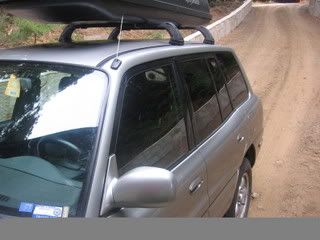
If the CHP officer could even see me, let alone whether I have my seatbelt on, he must have X-ray vision.
“Better slow it a bit,” I thought.
Just as I reached the south side of Anchor Bay, the CHP was behind me with his lights on. I thought he wanted to pass, so I pulled into the first part of the Anchor Bay parking lot and slowed, then stopped when he pulled in behind me. I was surprised when he stopped behind me, then got out of his patrol car.
“Darn,” I thought, “he’s going to ticket me for speeding, probably three or four miles per hour over the speed limit.”
Instead he said he was ticketing me for not wearing my seatbelt.
“I was wearing my seatbelt. I always wear my seat belt,” I replied.
“You are now, but you weren’t when I passed you,” he countered.
He then took my driver’s license and vehicle registration, and walked to the rear of my car to write the ticket.
When he came back, he said: “I could have got you for speeding, but that’s a moving violation, so I’m letting you off light just ticketing you for a seatbelt violation.”
(These quoted remarks, including my own, are actually paraphrased, but are accurate to the best of my recall.)
I protested again, and mentioned that I was a retired Air Force officer, and that in my over 21 years of service it was a military requirement to wear seatbelts at all times, and that I always did then, and always have since.
He said: “Then I’ll see you in court.”
And I said (I think): “I’ll be there.”
I’ll go to court because it’s a matter of principle. I may have been speeding slightly, but he didn’t ticket me for that. I was wearing my seatbelt, and I won’t say I wasn’t and pay a fine just because that’s easier than going to court.
When we go to court, there can be only one issue, and it’s very simple. The CHP officer will say I wasn’t wearing a seatbelt, and I’ll say I was.
My position will be that the CHP officer was mistaken, and could not see me well enough to notice that I had my seatbelt on.
The only position available for the CHP officer is to say I’m lying.
Neither of us can prove the other wrong, or prove that we were right.
When the judge decides, he will have no idea if he was right or wrong.
Neither will the CHP officer.
But no matter what the verdict, I’ll know.
Update: I had my day in court, and won! The officer was there, and said, among other things, that he could see the metallic buckle (or at least a reflection from it) over the top of my shoulder. I showed six photographs, similar to the one below, including one enlarged to 8 by 10.5 inches, that showed that all you could see was my hands on the steering wheel, and that the reflection of the high overcast off the windshield blocked the view of everything else on the driver's side.
If the CHP officer could even see me, let alone whether I have my seatbelt on, he must have X-ray vision.
Saturday, April 07, 2007
Playing Hard to Get

A lesson lost on the young ladies of today is the power of “playing hard to get.”
Not impossible to get, but hard to get.
Being easy never brought anyone long-term advantages.
As we used to say, back when I was a boy and half the country were farmers, “Why buy the cow when you can get the milk free?”
The lesson of playing hard to get may be lost on our young, lissome lovelies, but not on our legislators. They know the goodies, the earmarks, the set asides, go to the legislators whose votes must be seduced, not to the ones who vote their principles.
For example, suppose a bill comes up for vote that is favored by a legislator, who now and then will be referred to as Legislator X. So he/she/it votes for it. The party leadership says “We knew we could count on good old what’s-his/her/its-name.”
Suppose the same bill, the same legislator, but this time he/she/it says for some idealistic reason the bill is bad.
“It goes too far.”
“It doesn’t go far enough.”
“It will cost too much.”
“Not enough resources have been allocated to make it effective.”
In this way, the legislator can, in good conscience, oppose any bill, and not look like a hypocrite.
Now what happens? First, the party’s senior membership, who never gave good old what’s-his-name a second thought, now confer and ask, “What can we offer good old what’s-his-name to get his/her/its support on this?”
Meanwhile, what’s-his-face now finds he/she/it is the center of attention, and all are eager to ask what happened to support for the bill? Particularly, why no support for this bill, when passing it was the main reason our subject legislator said drove him to run for office?
What happened?
Now is the time for Legislator X to shine. The world is watching. The world is listening.
Will X blow it?
Actually, regardless of X’s eloquence, or more likely lack thereof, and regardless of any semblance of logic on the part of X, X is playing a winning hand.
Like the girl who said “no,” but with a twinkle in her eye, Legislator X has now become “one to be wooed.”
The girl who said “no” may eventually have gotten everything she would have if she said “yes,” plus she also got wined, dined, danced, and romanced.
So it is with our Legislator X, who in addition to seeing his pet bill passed, now has lots of porcine products to take back to his constituents. Reelection is assured by no longer being “taken for granted.”
Just like the girl showing her new ring to admiring girlfriends, there is a lot to be gained by playing hard to get.
Please click on the label below to see all my articles on this topic.
Wednesday, May 31, 2006
Country & Western - Telling Life's Stories
I grew up in the Rock 'n Roll generation, but Country and Western has always been my kind of music. I think I know why.
I think it’s because Country music is for grownups. Rock has been, and always will be, adolescent. Other forms of popular music feature roll playing. Sinatra having us pretend we are social sophisticates. Andy Williams sickening me with “Moon River, wider than a mile…I’m crossing you in style some day,” and “June, Moon, Spoon” too. Ella Fitzgerald, a great songstress of banal lyrics.
There’s the key. It’s the lyrics, stupid! A song is a story, packaged in a way that deeply stirs our emotions.
When I’m alone, I’m often driving with tears in my eyes, listening to Country music on my Ipod. And most of the time, the music is not sad, and often it’s very happy. But the tears flow nevertheless, because tears are my tribute to beauty.
Country performers are usually great musical craftsmen. The Statler Brothers polished their harmonies for years singing gospel music, and then applied it to great story-telling like “the Class of '57 had its dreams.” George Jones, sometimes with Tammy Wynette, portrayed adult love, loss, and longing in a way few ever have. “I know you’re tired of following, my elusive dreams and schemes…”
Hank Williams, Sr., celebrating the Cajuns of Louisiana with Jambaya (On the Bayou):
“Goodbye Joe, me gotta go, me oh my-o,
I got to go pole my pirogue down the bayou,
My Yvonne, the sweetest one, me oh my-o,
Sonofagun, we’ll have big fun, on the bayou.”
And, “Hey Good Lookin' (What cha got cookin'?).” Then a whole lot more.
Loretta Lynn, being a young mother:
“They say to have her hair done Liz flies all the way to France
And Jackie's seen in a discotheque doin' a brand new dance
And the White House social season should be glittering and gay
But here in Topeka the rain is a fallin'
The faucet is a drippin' and the kids are a bawlin'
One of them a toddlin' and one is a crawlin' and one's on the way”
Forgive me when I say, in my humble opinion, Loretta Lynn had a lot to say, and said it a lot better, than all the legions of rock ‘n roll songwriters dedicating their efforts towards the celebrations of lovesick adolescents.
Often I listen to Folk music too, from whence came County music. To the heart tugging eloquence of the Irish, who when they’re not glorifying drinking whiskey, tell many of the most interesting stories ever put to music.
My love of their stories began over fifty years ago, with the first haunting words, “Oh Danny Boy, the pipes, the pipes, are calling.” You could write a novel, make a movie, an opera, a Broadway musical, from the story line of that haunting song.
The same can be said for humorous Irish songs, like “The Mountains of Mourne.”
“Ah Mary this London’s a wonderful sight
With the people here working by day and by night
They don’t plant potatoes, nor barley, nor wheat
But there’s gangs of them digging for gold in the street.”
All of these songs have elements – mature insight, humor, religious conviction, appreciation of mortality, of honor, of loyalty, liberty, freedom – not the sorts of things that make sub-teenage girls, or wannabe gangstas, put their mother’s or father’s hard earned money down to buy a recording of a song written and performed with almost a total absence of musical talent or redeeming social value. It’s throw-away music, music that is so eminently forgettable that it won’t even make it to elevator-music immortality.
At least to be elevator music a song has to have a recognizable, catchy melody. The lack of such pretty much defines today’s popular music. To those who don’t, won’t, would never listen to country & western or folk music, it’s your loss. It’s music that makes you laugh, makes you cry, puts a smile on your face, a tear in your eye. It tells the story of life.
I think it’s because Country music is for grownups. Rock has been, and always will be, adolescent. Other forms of popular music feature roll playing. Sinatra having us pretend we are social sophisticates. Andy Williams sickening me with “Moon River, wider than a mile…I’m crossing you in style some day,” and “June, Moon, Spoon” too. Ella Fitzgerald, a great songstress of banal lyrics.
There’s the key. It’s the lyrics, stupid! A song is a story, packaged in a way that deeply stirs our emotions.
When I’m alone, I’m often driving with tears in my eyes, listening to Country music on my Ipod. And most of the time, the music is not sad, and often it’s very happy. But the tears flow nevertheless, because tears are my tribute to beauty.
Country performers are usually great musical craftsmen. The Statler Brothers polished their harmonies for years singing gospel music, and then applied it to great story-telling like “the Class of '57 had its dreams.” George Jones, sometimes with Tammy Wynette, portrayed adult love, loss, and longing in a way few ever have. “I know you’re tired of following, my elusive dreams and schemes…”
Hank Williams, Sr., celebrating the Cajuns of Louisiana with Jambaya (On the Bayou):
“Goodbye Joe, me gotta go, me oh my-o,
I got to go pole my pirogue down the bayou,
My Yvonne, the sweetest one, me oh my-o,
Sonofagun, we’ll have big fun, on the bayou.”
And, “Hey Good Lookin' (What cha got cookin'?).” Then a whole lot more.
Loretta Lynn, being a young mother:
“They say to have her hair done Liz flies all the way to France
And Jackie's seen in a discotheque doin' a brand new dance
And the White House social season should be glittering and gay
But here in Topeka the rain is a fallin'
The faucet is a drippin' and the kids are a bawlin'
One of them a toddlin' and one is a crawlin' and one's on the way”
Forgive me when I say, in my humble opinion, Loretta Lynn had a lot to say, and said it a lot better, than all the legions of rock ‘n roll songwriters dedicating their efforts towards the celebrations of lovesick adolescents.
Often I listen to Folk music too, from whence came County music. To the heart tugging eloquence of the Irish, who when they’re not glorifying drinking whiskey, tell many of the most interesting stories ever put to music.
My love of their stories began over fifty years ago, with the first haunting words, “Oh Danny Boy, the pipes, the pipes, are calling.” You could write a novel, make a movie, an opera, a Broadway musical, from the story line of that haunting song.
The same can be said for humorous Irish songs, like “The Mountains of Mourne.”
“Ah Mary this London’s a wonderful sight
With the people here working by day and by night
They don’t plant potatoes, nor barley, nor wheat
But there’s gangs of them digging for gold in the street.”
All of these songs have elements – mature insight, humor, religious conviction, appreciation of mortality, of honor, of loyalty, liberty, freedom – not the sorts of things that make sub-teenage girls, or wannabe gangstas, put their mother’s or father’s hard earned money down to buy a recording of a song written and performed with almost a total absence of musical talent or redeeming social value. It’s throw-away music, music that is so eminently forgettable that it won’t even make it to elevator-music immortality.
At least to be elevator music a song has to have a recognizable, catchy melody. The lack of such pretty much defines today’s popular music. To those who don’t, won’t, would never listen to country & western or folk music, it’s your loss. It’s music that makes you laugh, makes you cry, puts a smile on your face, a tear in your eye. It tells the story of life.
Sunday, February 26, 2006
Number, Please?
 The dial telephone did not come to Point Arena until approximately 1954. Up till then, we had crank telephones. You started the call by turning the crank, then you lifted the ear piece out of the cradle and waited. Soon the operator, usually Pearl Warren (and before her, Dorothy Halliday), would come on the line: “Number, please?”
Our number was 41W. Two rings. We were on a party line with the Methodist preacher. His number was 41J. One ring. Most of my friends had private lines, with numbers like 2, and 45; you could tell the ones with private lines because they didn’t have a letter after the number.
The dial telephone did not come to Point Arena until approximately 1954. Up till then, we had crank telephones. You started the call by turning the crank, then you lifted the ear piece out of the cradle and waited. Soon the operator, usually Pearl Warren (and before her, Dorothy Halliday), would come on the line: “Number, please?”
Our number was 41W. Two rings. We were on a party line with the Methodist preacher. His number was 41J. One ring. Most of my friends had private lines, with numbers like 2, and 45; you could tell the ones with private lines because they didn’t have a letter after the number. When Ron and I came home from school, for one reason or another we would usually want to get in touch with Mom. If we weren’t in a hurry, or just wanted to go downtown anyway, we could tell Puddles to “find Mom.” But if we were in a hurry, or wanted to let her know we would be at a friend’s house, we used the phone.
“Number, please?”
When we were little, we used to just tell the operator the place we were calling – “Motel, please” – instead of the number. Now that we were big, we used the numbers.
“36, please.”
“Mike, your mother isn’t at the Motel,” Pearl might say. “I just saw her walking up the street. I think she was going to Disotelle’s. I’ll ring the bar for you.”
The telephone switchboard where Pearl worked was in a building in the center of downtown Point Arena, next to Titus’ Sweet Shop, with a big picture window that overlooked Main Street. Between keeping track of everyone by their phone calls, and watching their comings and goings on Main Street, Pearl usually had a pretty good idea about where most of us were at any point in time.
Today we have cell phones, and pagers, and all sorts of other sophisticated electronics. None of them work worth a darn in Point Arena. After more than sixty years have passed, and after all our progress in electronics, we still got better service in Point Arena when Pearl came on the line: “Number, please?”
Saturday, February 25, 2006
Puddles, The Pup
One fine Saturday, during the summer of 1950, Pop drove us from Point Arena to Booneville in our old red International Harvester pickup truck. As usual, when we got to Philo Pop was dying of thirst, so we stopped at Pardini’s Restaurant and Bar. Mom and Pop had a couple of cold Burgies (Burgermeister Beer, Pop’s favorite). Brother Ron and I had a soda pop each, then we started to explore the bar area. Our exploration soon took us to the Men’s restroom, and when we opened the door the cutest black puppy ran out wagging her whole body, licking us, and in her excitement, piddling on the floor.
The bartender saw the excited puppy jumping all around us and piddling on his floor, and told us that a guy came in with the dog earlier, and must have left it in the bathroom. That started a search of the restaurant and the parking lot, and one fellow said he had seen the man with the dog, and had seen the guy drive off. After a while there was a general agreement that the man had forgotten the dog, or had abandoned her. Of course, by that time Ron and I had fallen completely in love with the cute little thing, and had already named her Puddles. We were sure that Puddles had been abandoned, and that no one would come back to get her, and could we keep her, please! At first it looked like Pop’s answer would be “no,” but after a while watching us, and Puddles, and petting her a bit himself, the answer was a qualified “yes.” Yes, we could take her with us, but we would leave our address and phone number in case Puddles had been forgotten, and her owner came back to get her.
So we took Puddles home with us, and after a while the worry that her owner would come back for her slowly faded out of our minds. At the same time, every one of us developed such a love for Puddles that before long she was an inseparable family member. Puddles was a cocker spaniel, but she also had some other breed of dog in her. What breed, no one had any idea. Puddles was smaller than a cocker spaniel, had a relatively longer body and relatively shorter legs, with short black hair and a bobbed tail. Plus the sweetest face and the most adorable eyes that two young boys had ever seen.
Soon Puddles was a part of and increased our enjoyment of everything we did. When we all went for the evening to the Point Arena Hotel bar (children could accompany their parents to bars in those days), Puddles would soon charm everyone in the bar. When Mom and Pop would dance, Puddles would take Pop’s pants leg in her mouth and dance too. At the end of the dance, she would go along the bar accepting packages of beef jerky from the spectators.
Puddles quickly made everything around her a part of her life. We used our wood burning cook stove to heat the room when we lived in the old abandoned high school building. To get maximum heating, we would open the oven door by pulling it down. Puddles soon found she could hop up onto the door, and even crawl into the oven to get nice and warm. She would then go to sleep, and as the oven got warmer, while still asleep she would move out of the oven, onto the door, and eventually move so far away from the heat that she would fall off the oven door onto the floor.
There was nothing we did that Puddles didn’t find a way join in. When Pop moved our milk cow, Cinnamon, from one pasture to another in town, he would tie a short rope around Cinnamon’s neck and give the other end to Puddles. Then Pop, Puddles, and Cinnamon would strike out down Highway One to the new pasture. Pop would lead, and Puddles would follow leading Cinnamon. Passers-by would stop their cars and look and laugh at the proud little dog leading the docile cow, with Pop in the lead, cigarette in one hand, can of beer in the other.
Mom worked at many cleaning jobs in downtown Point Arena, including the Point Arena Theater, the Motel, and the rooms above Titus’ Sweet Shop. When we came home from school we could tell Puddles, “Find Mom.” Puddles would trot out the door, lead us down the hill into the center of town, and then sniff at doors starting at the Theater and working her way down the street towards the Motel. Sometimes Puddles would find Mom at the Theater, sometimes at Fred and Flora Price’s bar in the Hotel, or in the Motel, but she always found her.
Puddles had a mysterious talent, too. At around five in the afternoon, Puddles would let us know she wanted to be let out of the house to wait in the driveway for Pop to come home from work. We would let her out, and about five minutes later Pop would pull into the driveway. If Puddles wanted out earlier than normal, Pop would get home earlier than usual. And if Puddles didn’t want out at five, we knew Pop would be late. It was uncanny. Puddles never went out just before Pop pulled in, which would have indicated that she could hear our new old car, the 1946 Chevy, clunking down the road quite a ways away. No, she always went out five minutes before his arrival, when Pop was at least three or four miles away.
Puddles died after Christmas in early 1961, when I was in my Freshman year at Humboldt State College. I was very sad, knowing she was gone and that I wouldn’t be able to come home and say good-bye to her until Spring Break two months later. Now forty-five years have passed, and I still miss her. And I’m still thankful for the wonderful ten years we shared.
If dogs have a Heaven
There’s one thing I know
Little Puddles has
A wonderful home.
The bartender saw the excited puppy jumping all around us and piddling on his floor, and told us that a guy came in with the dog earlier, and must have left it in the bathroom. That started a search of the restaurant and the parking lot, and one fellow said he had seen the man with the dog, and had seen the guy drive off. After a while there was a general agreement that the man had forgotten the dog, or had abandoned her. Of course, by that time Ron and I had fallen completely in love with the cute little thing, and had already named her Puddles. We were sure that Puddles had been abandoned, and that no one would come back to get her, and could we keep her, please! At first it looked like Pop’s answer would be “no,” but after a while watching us, and Puddles, and petting her a bit himself, the answer was a qualified “yes.” Yes, we could take her with us, but we would leave our address and phone number in case Puddles had been forgotten, and her owner came back to get her.
So we took Puddles home with us, and after a while the worry that her owner would come back for her slowly faded out of our minds. At the same time, every one of us developed such a love for Puddles that before long she was an inseparable family member. Puddles was a cocker spaniel, but she also had some other breed of dog in her. What breed, no one had any idea. Puddles was smaller than a cocker spaniel, had a relatively longer body and relatively shorter legs, with short black hair and a bobbed tail. Plus the sweetest face and the most adorable eyes that two young boys had ever seen.
Soon Puddles was a part of and increased our enjoyment of everything we did. When we all went for the evening to the Point Arena Hotel bar (children could accompany their parents to bars in those days), Puddles would soon charm everyone in the bar. When Mom and Pop would dance, Puddles would take Pop’s pants leg in her mouth and dance too. At the end of the dance, she would go along the bar accepting packages of beef jerky from the spectators.
Puddles quickly made everything around her a part of her life. We used our wood burning cook stove to heat the room when we lived in the old abandoned high school building. To get maximum heating, we would open the oven door by pulling it down. Puddles soon found she could hop up onto the door, and even crawl into the oven to get nice and warm. She would then go to sleep, and as the oven got warmer, while still asleep she would move out of the oven, onto the door, and eventually move so far away from the heat that she would fall off the oven door onto the floor.
There was nothing we did that Puddles didn’t find a way join in. When Pop moved our milk cow, Cinnamon, from one pasture to another in town, he would tie a short rope around Cinnamon’s neck and give the other end to Puddles. Then Pop, Puddles, and Cinnamon would strike out down Highway One to the new pasture. Pop would lead, and Puddles would follow leading Cinnamon. Passers-by would stop their cars and look and laugh at the proud little dog leading the docile cow, with Pop in the lead, cigarette in one hand, can of beer in the other.
Mom worked at many cleaning jobs in downtown Point Arena, including the Point Arena Theater, the Motel, and the rooms above Titus’ Sweet Shop. When we came home from school we could tell Puddles, “Find Mom.” Puddles would trot out the door, lead us down the hill into the center of town, and then sniff at doors starting at the Theater and working her way down the street towards the Motel. Sometimes Puddles would find Mom at the Theater, sometimes at Fred and Flora Price’s bar in the Hotel, or in the Motel, but she always found her.
Puddles had a mysterious talent, too. At around five in the afternoon, Puddles would let us know she wanted to be let out of the house to wait in the driveway for Pop to come home from work. We would let her out, and about five minutes later Pop would pull into the driveway. If Puddles wanted out earlier than normal, Pop would get home earlier than usual. And if Puddles didn’t want out at five, we knew Pop would be late. It was uncanny. Puddles never went out just before Pop pulled in, which would have indicated that she could hear our new old car, the 1946 Chevy, clunking down the road quite a ways away. No, she always went out five minutes before his arrival, when Pop was at least three or four miles away.
Puddles died after Christmas in early 1961, when I was in my Freshman year at Humboldt State College. I was very sad, knowing she was gone and that I wouldn’t be able to come home and say good-bye to her until Spring Break two months later. Now forty-five years have passed, and I still miss her. And I’m still thankful for the wonderful ten years we shared.
If dogs have a Heaven
There’s one thing I know
Little Puddles has
A wonderful home.
You Gotta Ring Them Bells
After we moved to Point Arena in 1949, we would occasionally drive to Booneville, and Pop would get thirsty about the time we got to Pardini’s Restaurant and Bar in Philo. Back in those days, children could accompany their parents in the bar area, and my brother Ron and I always enjoyed the time we spent in bars with our folks. We would get a soda pop, sometimes grenadine with 7-Up and a cherry. We both got really good at bumper pool, and shuffle board, and liars' dice. Speaking for myself, I also easily memorized the lyrics to every popular and Country and Western song of the late Forties and early Fifties, and the lyrics haunt my mind to this very day. It’s scary to have The Squaws along the Yukon, Down in the Caribbean, Slow Poke, This Old House, The Pawnshop on the Corner in Pittsburgh Pennsylvania, and The Blacksmith Blues running through your head at odd hours day and night.
One time, sitting near the bar at Pardini’s sipping my soda, I overheard the proprietor telling Pop about when he was a young man and had just gotten married. At that time, he and his family all lived in rooms above the bar and restaurant, and after the wedding and a lot of partying, drinking, and dancing, the newlyweds finally excused themselves and went upstairs to their bedroom. Their bedroom was directly over the bar, and a hole had been drilled above the bar and through the floor under the bed. A string had been threaded through the hole and one end tied to the bed. The other end was tied to a bell that dangled above the bar. Every time the bell started ringing briskly, the drinks were on the house. The father of the groom had been heard to lament that the lusty young couple nearly put him in the poor house that night.
One time, sitting near the bar at Pardini’s sipping my soda, I overheard the proprietor telling Pop about when he was a young man and had just gotten married. At that time, he and his family all lived in rooms above the bar and restaurant, and after the wedding and a lot of partying, drinking, and dancing, the newlyweds finally excused themselves and went upstairs to their bedroom. Their bedroom was directly over the bar, and a hole had been drilled above the bar and through the floor under the bed. A string had been threaded through the hole and one end tied to the bed. The other end was tied to a bell that dangled above the bar. Every time the bell started ringing briskly, the drinks were on the house. The father of the groom had been heard to lament that the lusty young couple nearly put him in the poor house that night.
Where Did You Get That Accent?
“I think you’re from the South. You have a southern accent.” I’ve heard this from many people the past fifty years. Not as much anymore. Years pass, and my southern accent has faded.
I didn’t come by my Southern accent the usual way. My parents weren’t from the South. Pop was born in Washington State on the flank of Mount St. Helens, and grew up in Bakersfield, California. Mom was born in Bradford, Pennsylvania, and grew up in Maricopa, California. I was born in Torrance, California, and grew up in Point Arena on the northern California coast. I was twenty years old before I got further from California than Reno, Nevada, and Tijuana, Mexico.
So where did I get my southern accent? For the answer we have to look at historical migration and employment patterns affecting California during the past century. During the Depression, many Southerners came to California looking for work and to escape the Dust Bowl years, as Steinbeck chronicled in The Grapes of Wrath. Many of them came from oil drilling parts of the South, particularly Oklahoma. When I was a five-year old in Bakersfield in 1947 I remember listening to a song:
Dear Okie,
If'fen you seen Arky
Tell him Tex got a job for him
Out in Californy
A lot of the Southerners got jobs in the oil fields, and that’s where Pop worked as a “roughneck” from about 1932 until 1949, except for the war years when he worked in Long Beach building Liberty ships, again alongside a lot of Southerners.
When we moved to Point Arena in Northern California in 1949, and Pop worked in the sawmills, one thing didn’t change. Most of his fellow workers were from the South. When the Air Force built the Point Arena radar station in 1950, most of the military that manned it were from the South.
So there is the explanation for my Southern accent. I didn’t go to the South. The South came to me.
I didn’t come by my Southern accent the usual way. My parents weren’t from the South. Pop was born in Washington State on the flank of Mount St. Helens, and grew up in Bakersfield, California. Mom was born in Bradford, Pennsylvania, and grew up in Maricopa, California. I was born in Torrance, California, and grew up in Point Arena on the northern California coast. I was twenty years old before I got further from California than Reno, Nevada, and Tijuana, Mexico.
So where did I get my southern accent? For the answer we have to look at historical migration and employment patterns affecting California during the past century. During the Depression, many Southerners came to California looking for work and to escape the Dust Bowl years, as Steinbeck chronicled in The Grapes of Wrath. Many of them came from oil drilling parts of the South, particularly Oklahoma. When I was a five-year old in Bakersfield in 1947 I remember listening to a song:
Dear Okie,
If'fen you seen Arky
Tell him Tex got a job for him
Out in Californy
A lot of the Southerners got jobs in the oil fields, and that’s where Pop worked as a “roughneck” from about 1932 until 1949, except for the war years when he worked in Long Beach building Liberty ships, again alongside a lot of Southerners.
When we moved to Point Arena in Northern California in 1949, and Pop worked in the sawmills, one thing didn’t change. Most of his fellow workers were from the South. When the Air Force built the Point Arena radar station in 1950, most of the military that manned it were from the South.
So there is the explanation for my Southern accent. I didn’t go to the South. The South came to me.
Thursday, February 16, 2006
The House We Built

The house we built at 425 Main Street, Point Arena - still standing over sixty-five years later.
(It looked bigger then - it does have a full-size basement)
Our family bought three acres at the corner of Main and Lake Streets, Point Arena, California, that went down over the sidehill behind to border Windy Hollow Road. I think we bought it in 1954, and the whole family pitched in to buy it. Ronald and I chipped in money from our savings accounts we had built up delivering the Santa Rosa Press Democrat for several years.
The first thing we did was help Pop dig a well by hand. He started digging with a pick and shovel at the base of the hill near the most northerly part of our property near Windy Hollow Road. Ron and I pulled the buckets of dirt out of the hole and dumped them. Pop struck water at about four feet (the well was very close to a wet, marshy area). Pop knew before he started digging that we weren’t going to have any trouble finding water.As Pop kept digging, the water poured in faster. He had to keep a pump running constantly, or stop digging. The well was five feet wide, and when Pop dug down about sixteen feet, he said it was time to quit.
Pop built a wooden form, and we used a cement mixer to pour a concrete casing with holes in the sides near the bottom to let the water flow in.
Next, we drew up plans for the house. Pop roughed out the dimensions on a piece of typewriter paper, then gave me (12 years old then) a piece of poster paper about two by three feet. Pop’s instructions to me were simple. Measure everything carefully to scale, draw sharp right angles, and be very neat. I took the poster paper, my No. 2 pencil and sharpener, gum eraser, protractor and compass, and steel edged fifteen-inch ruler, and in a couple of days completed the drawing. Anyway, I thought the drawing was complete. Unfortunately, Pop found I made a side dimension wrong, so I flipped the poster paper over and did a corrected drawing on the other side. The second time it passed review, so Pop tacked it onto a piece of plywood, and we started building.
We began by digging a full-sized basement. No other house built on flat land in Point Arena had a basement, but we were going to have one. Pop borrowed a plow horse, harness, and clam-shell scraper (it looks like a wheel barrow without a wheel, is pulled by the horse, and also is known as a Fresno Scraper) from a local rancher and saw mill worker, Johnny Remstedt. Johnny lived with his wife, son, and some very lovely daughters about a mile north of us on Windy Hollow Road. I think Donna, the youngest of the pretty Remstedt daughters, had named the horse Prince.
By the by, Windy Hollow is well named. The hollow runs due north from our old property to the Pacific Ocean, and the wind comes unimpeded all the way from the Arctic across the Pacific, and it builds up speed as it funnels down the ever narrowing hollow until it reaches full force as it hits the exterior wall of the bedroom Ron and I shared.
Ron and I spent quite a bit of the summer of 1954 digging the basement, with the horse doing most of the work. Ron and I would alternate, one working the horse and clam-shell scraper, while the other used a mattock to loosen the dirt. Working the horse was fun. We looped the reins behind our neck, grasped a handle with each hand, and tilted the handles up enough to get the scraper to bite into the dirt. When the scraper was full of dirt, we dropped the handles and used the reins to guide the horse to the dirt pile. To dump the dirt, we just lifted the handles up high and flipped them forward to turn the scraper upside down. We then stopped the horse, righted the scraper, guided the horse back down the ramp into the basement, and repeated the process.
After a couple of weeks of good digging, Pop started checking the depth each day when he got home from the saw mill. One day he spent quite a bit of time checking all around the hole, then told Ron and I that it was deep enough, we could stop digging.
That was a very happy, sad moment. It had been fun working Prince, and it was kind of sad to realize that the part of the project we had been so useful on was done. The next phase would be done mostly by Pop and a skilled carpenter named Henry Eddy. Ron and I would be working as unskilled helpers. But the house, our home, was becoming more real each day.
Ron and I were still valuable workers. We were good at mixing concrete in the cement mixer, and we poured a lot of concrete – the floor of the basement, the basement walls, the foundation – all concrete, all mixed by us in the cement mixer. It wasn’t until many years later that premixed concrete trucks replaced portable cement mixers in the Point Arena/Gualala area.
When the foundation was poured, the next really important project we helped on was putting down the wooden floor. As soon as the floor was finished, we moved into the basement and lived there, because the floor also served as a roof for the basement. Now we could live in the basement while completing the house above.
Subscribe to:
Posts (Atom)